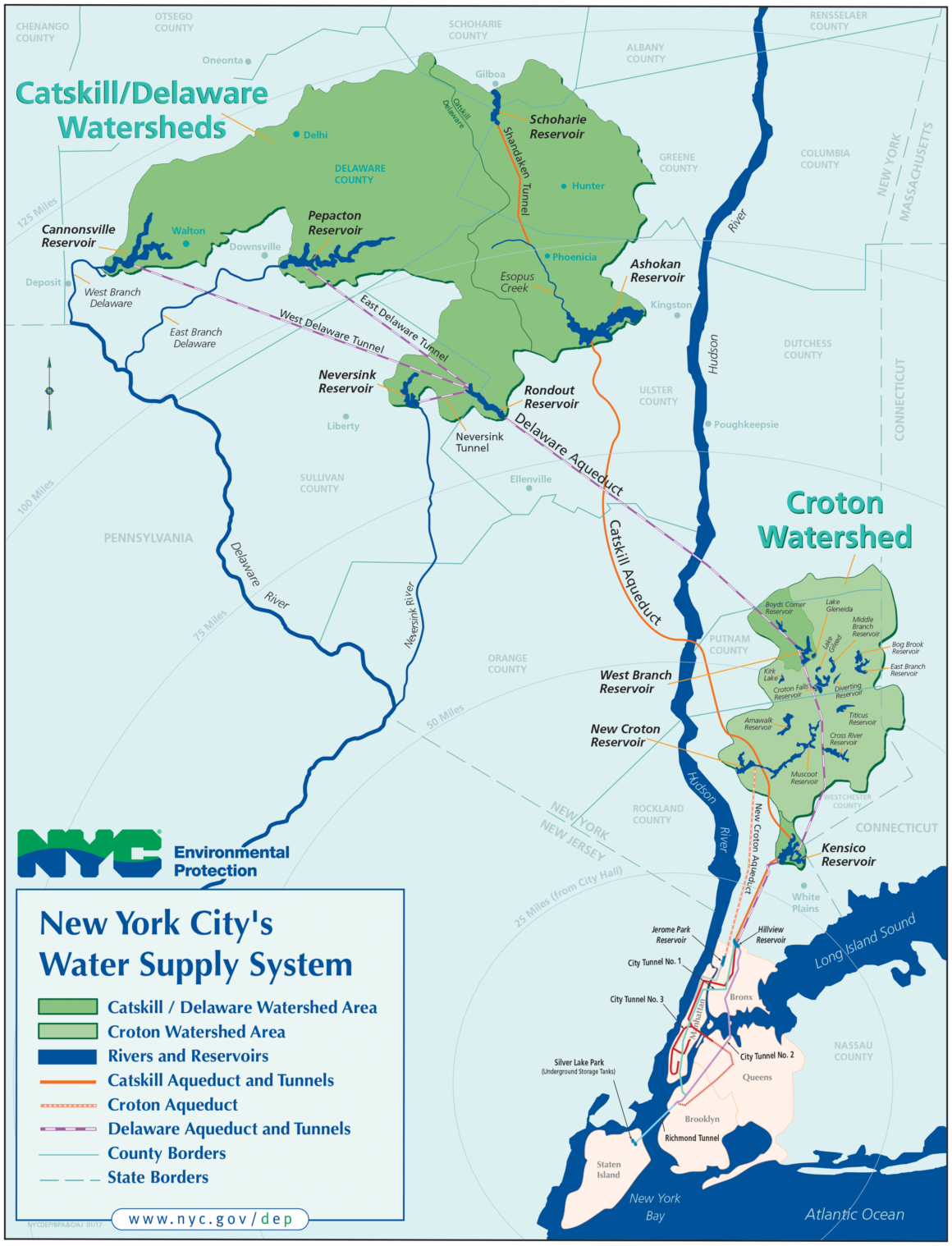
New York City’s water supply is one of the largest surface water systems in the world — and one of only five in the U.S. that still delivers unfiltered surface water. Every day, the system provides 1.1 billion gallons of safe drinking water to more than nine million people (nearly half of New York State’s population).
The Watersheds
NYC’s water comes from two primary sources:
Catskill / Delaware Watersheds
1,597 sq. miles, West of the Hudson
Croton Watershed
375 sq. miles, East of the Hudson
Together, they cover 1,972 sq. miles (about 1.2 million acres) and include 19 reservoirs and 3 controlled lakes.
Catskill/Delaware Watersheds (West of Hudson)
Location
Delaware, Greene, Schoharie, Sullivan, and Ulster counties
Area
1,597 sq. miles
Supplies
~90% of NYC’s daily water
Characteristics
Largely rural, small to mid-sized dairy/vegetable farms, ~75% forested (85% privately owned)