
Why We Matter
NYC Residents
-
**Awaiting client**
-
???
-
???

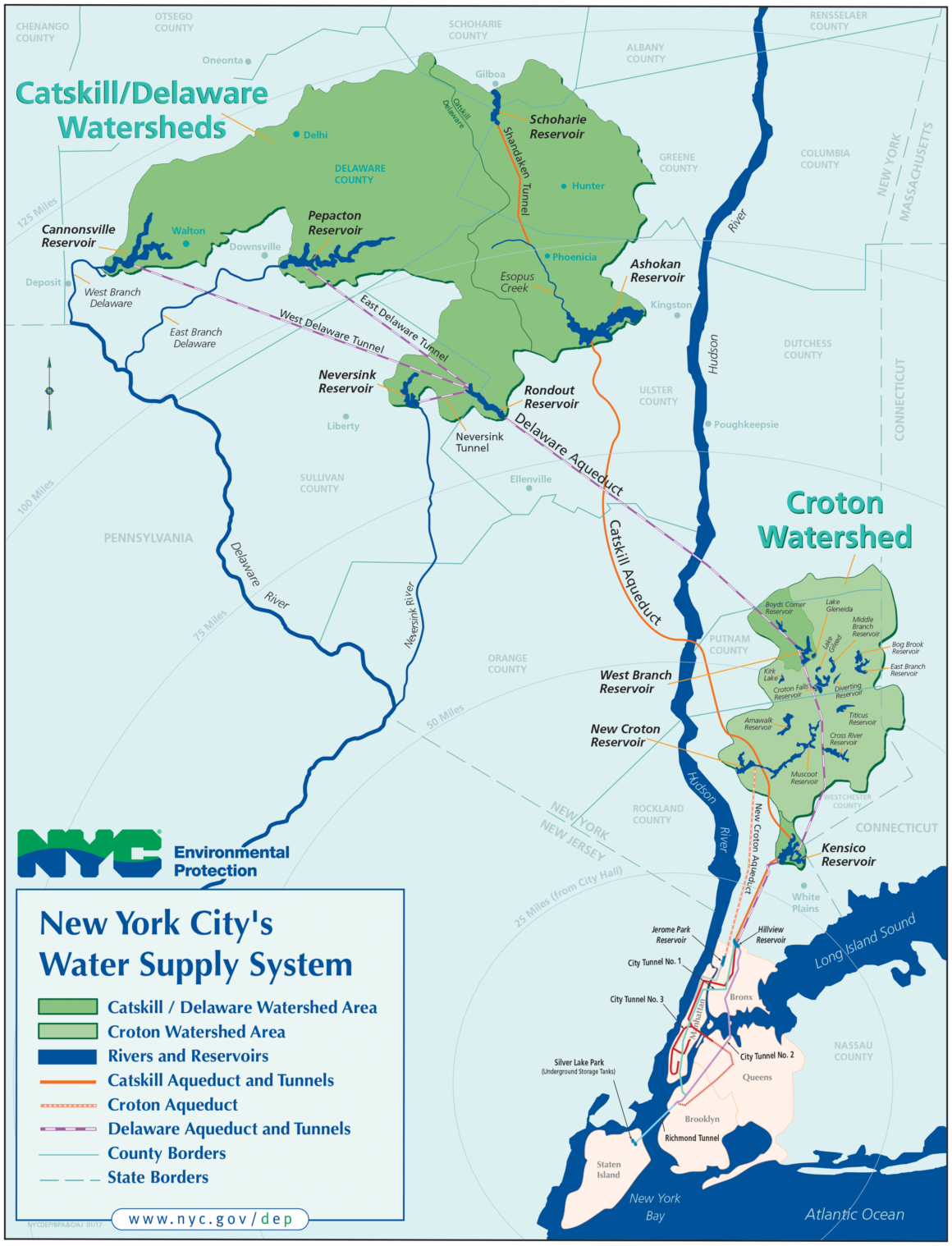
New York City’s water supply is one of the largest surface water systems in the world — and one of only five in the U.S. that still delivers unfiltered surface water. Every day, the system provides 1.1 billion gallons of safe drinking water to more than nine million people (nearly half of New York State’s population).
NYC’s water comes from two primary sources:
375 sq. miles, East of the Hudson
Together, they cover 1,972 sq. miles (about 1.2 million acres) and include 19 reservoirs and 3 controlled lakes.
Delaware, Greene, Schoharie, Sullivan, and Ulster counties
1,597 sq. miles
Ashokan, Cannonsville, Neversink, Pepacton, Rondout, Schoharie
See our program footprint map and check to see if you are in the NYC Watershed here.
Westchester, Putnam, and Dutchess counties (NY) + Fairfield County (CT)
375 sq. miles
~10% of NYC’s daily water (up to 30% in droughts or emergencies), the Croton Watershed is filtered
Amawalk, Bog Brook, Cross River, Croton Falls, Diverting, East Branch, Kensico, Middle Branch, Muscoot, New Croton, Titicus, West Branch, Boyds Corner
Kirk Lake, Lake Gilead, Lake Gleneida

[triangle-down]
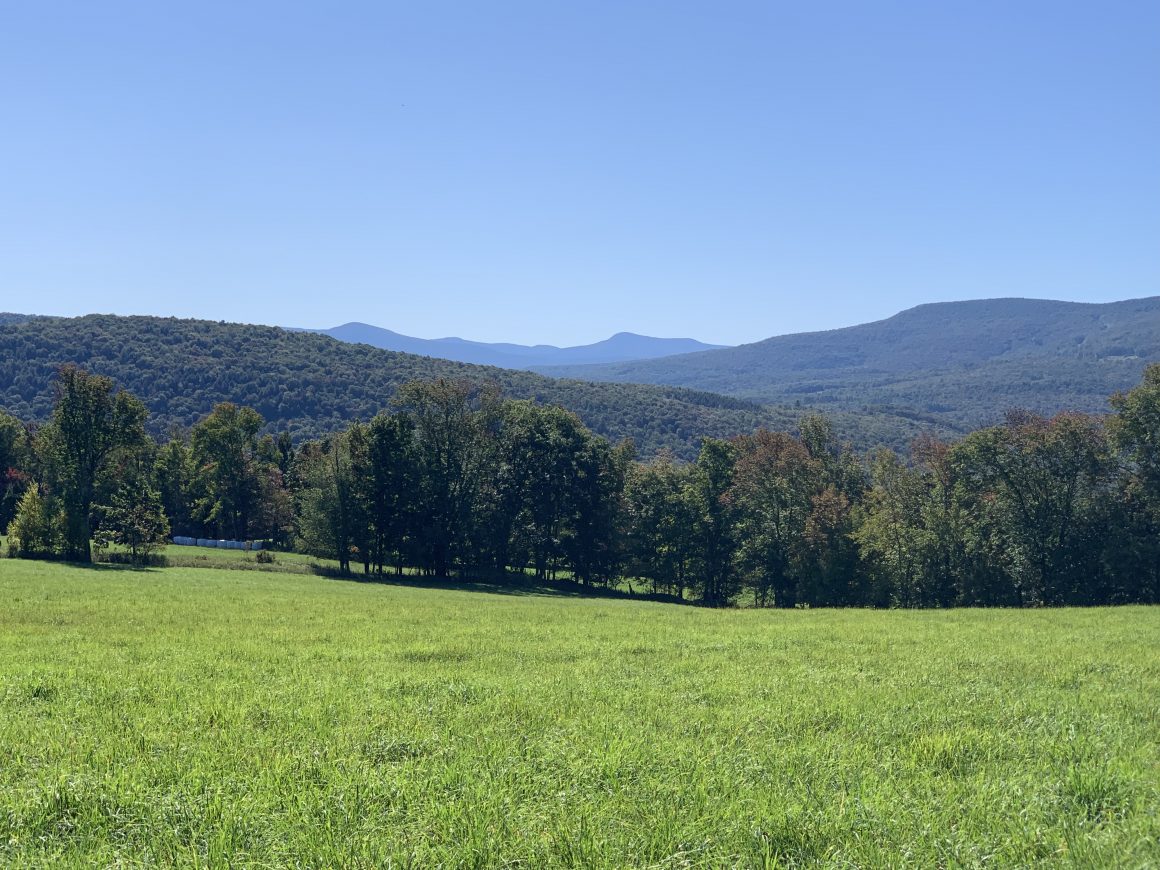
30,000 Acres of Land Protected
The Conservation Easement program has protected over 30,000 acres of farm and forest land for 200+ NYC Watershed families.
[more]

WAC’s 25th Anniversary
[more]

NYC Filtration Avoidance Determination Renewed through 2027
[more]

$43 Million Conservation Easement Stewardship Endowment
The endowment, which was funded by New York City, will be used by WAC to steward easement lands that are held by the council now and in the future.
Precision Feed Management Program launched
[more]

Forestry Easement Pilot Program Launched
Conservation Easement program to protect forest lands implemented.
MyWoodlot website launches.
[more]

Pure Catskills Rebranded to Include Forest Products
Pure Catskills brand expands to promote both Farm and Forest Products from producers of the NYC Watershed/Catskills region.
[more]

Revitalized Mission
The Watershed Agricultural Council strives to promote the economic viability of agriculture and forestry, the protection of water quality, and the conservation of working landscapes through strong local leadership and sustainable public-private partnerships.
[more]

Programs That Work
New York City drinking water continues to meet national standards. The Environmental Protection Agency extends the Filtration Avoidance Determination (F.A.D.) another ten years, a testament to the successes of this international watershed model with urban/rural benefits.
[more]

Pure Catskills Begins
[more]

Green Connections
NYC/Watershed Classroom partnership established
[more]

Agricultural Conservation Easement Program Started
[more]

NYC Memorandum of Agreement
Filtration FAD Goals Restructured
New Goals for:
East of Hudson Program started in the Croton Watershed
[more]

Foresters Log On
Economic Viability and Outreach Programs Started
[more]

Implementation
Phase II Begins
[more]

Incorporation of WAC
EPA grants NYC a Waiver of filtration
[more]

10 Pilot Farms Started
Phase I Begins
[more]

Collaboration
“Brown Book” Establishes Program Guidelines
[more]

NYC DEP Proposes Watershed Regulations
[more]

Federal Safe Drinking Water Act
Filtration required for surface drinking water supplies

There have been countless success stories at the Watershed Agricultural Council. Showcased here are various farmer stories and testimonials as well as before and after photos and videos of projects that have been completed to ensure the protection of water quality in the NYC Watershed.

WAC offers its’ employees (and their families) Excellus BCBS for their health insurance needs. WAC pays 95% of this policy and offers a buyout for those employees who do not need this insurance.
WAC offers its’ employees (and their families) Guardian for their dental and vision insurance needs WAC pays 95% of this policy and offers a buyout for those employees who do not need this insurance.
Employees can choose to participate in a pre-tax flexible spending account. This account can be used for medical, dental and vision costs not covered by insurance.
WAC contributes 8% of employees’ gross wages from day one of employment to a TIAA retirement plan. WAC’s contributions increase with years of service and a minimal required employee contribution. Employees can opt to open a Supplemental Retirement account as well, funding this with pre-tax payroll deductions.
WAC pays for a life insurance policy equivalent of 1-times the employee’s gross salary, with a maximum of a $50,000 policy. UNUM also offers employees voluntary life insurance policies if they choose to participate.
WAC pays for a $100,000 life insurance policy for managerial employees through William Penn or Secured Mutual.
WAC pays for an employee’s short-term disability policy. After one year of employment, WAC pays for a long-term disability policy for employees through First Reliance.
WAC pays the employer share of FICA/Medicare on behalf of employees.
AFLAC offers voluntary accident, hospitalization and cancer policies, should employees wish to participate.
Combined offers voluntary life insurance, accidental death and dismemberment, disability, hospital indemnity, and accident and critical illness plans for employees and their families, should employees wish to participate.
*Voluntary insurance premiums are 100% employee paid at a substantially reduced group discount rate.

Visit our Careers page to see active job listings.
For a list of 2026 Committee Members click here.

The Watershed Agricultural Council (WAC) partners with farm and forest landowners across the New York City Watershed to protect clean drinking water for more than nine million New York residents.
Through Whole Farm Plans, Forest Management Plans, and Conservation Easements, we help landowners implement sustainable practices that improve water quality, reduce pollution, and strengthen working lands in both the Croton and Catskill/Delaware Watersheds.
Widely recognized as a model public–private partnership, WAC uses a Payment for Ecosystem Services (PES) approach—an incentive-based system that empowers private landowners to act as stewards of New York City’s drinking water. Thanks to their voluntary participation, more than 1.1 billion gallons of clean water flow to city residents every day.
in watershed programs.
through our nonprofit structure.
from the NYC Department of Environmental Protection, USDA, United States Forest Service, and others.
Collaboration is central to our approach. WAC partners with local, regional, state, and federal agencies—as well as nonprofits—drawing on the expertise of Cornell Cooperative Extensions, County Soil & Water Conservation Districts, and the USDA Natural Resources Conservation Service.
To promote the economic viability of agriculture and forestry, protect water quality, and conserve working landscapes through strong local leadership and sustainable public–private partnerships.
A watershed where agriculture and forestry remain vital ways of life, water quality is safeguarded through science-based practices, and working lands are preserved for future generations.
Balance: Protecting water while sustaining working farms and forests.
Stewardship: Conserving natural resources within active landscapes.
Science-based Solutions: Applying proven best management practices.
Collaboration: Building strong partnerships that advance our mission.
Service: Supporting landowners, partners, and communities with care.
Sustainability: Strengthening agriculture and forestry for the long term.

