Document Category: Forestry

Management Assistance Program (MAP)
Management Assistance Program (MAP)
Research shows that landowners value their forests for more than economics. They cherish the aesthetic beauty, wildlife habitat, and recreational retreat their land provides. To support these values, the Watershed Agricultural Council (WAC) offers funding to improve forest health while also protecting water quality.
The Management Assistance Program (MAP) is a financial incentive program that helps offset the cost of forest management activities on properties in the New York City Watershed. In addition to funding stewardship activities, MAP also provides technical support for landowners.
Activities Eligible for MAP Funding (click on activity for additional details):
-
Site Visit with a Watershed Forester
Meet one-on-one with a Watershed Forester for guidance, property goals, and woodlot management options.
-
Timber Stand Improvement (TSI)
TSI is to a forest what weeding is to a garden. It improves timber growth and quality by removing low-quality trees and giving healthy crowns space to thrive.
-
Tree Planting
Supports forest regeneration through site preparation, planting, tree shelters, and fencing — promoting timber production, carbon storage, and cleaner water.
-
Invasive Plant Control
Reduce or eliminate invasive species (native or non-native) that interfere with your forest management goals.
-
Stream Bank (Riparian) Improvement
Plant shrubs and/or trees along non-forested streams to improve trout habitat, slow runoff, trap sediment, protect stream banks, and shade wetlands.
-
Wildlife Improvement Practices, including:
– Wildlife Crop Tree Release
– Fruit Tree Release/Pruning
– Seep and Vernal Pool Protection and Enhancement
– Wildlife Seeding in a Forest Opening
– Snag and Cavity Tree Development
– Early Successional Habitat Management
How to Apply
Applications are accepted year-round and reviewed monthly. Work may be completed by the landowner, a contractor, or both. Projects must be completed within six months of approval and are paid upon completion.

MyWoodlot
MyWoodlot
As a landowner, you’re unique — and so is your land. What you want to do with your property is unique, too. If you have questions or aren’t sure where to start, MyWoodlot.com can help. Built by the Watershed Agricultural Council (WAC), MyWoodlot.com provides information and resources to help you care for and enjoy your land in ways that reflect your personal goals.
We’ve gathered some of the best woodland resources from both landowners and professionals, and presented them in the context of real projects you can actually do.
MyWoodlot is free and available 24/7.
-
Areas of interest:
The content on MyWoodlot is organized into twelve key areas of interest:
- Beauty & Scenery
- Climate Change & My Woods
- Community
- Income
- Fire & Storm Damage
- Leaving a Legacy
- Nature & Wildlife
- Pests
- Privacy & Tresspassing
- Protecting Water
- Recreation
- Reducing Taxes
-
My Woodlot Additional Features Include:
- Blogs: Written by forestry staff and partners, offering insights into their work and forest management tips.
- Discussion Forum: Ask questions and get answers from Forestry staff, experts and fellow landowners.
- Events: Stay informed about workshops and events relevant to forestland owners.
- Wish List & Profile: Create a profile to save forest activities and projects to return to later.
- Searchable: While the content is organized by key interest areas, a powerful search feature helps you quickly find specific information.

Trees 4 Tributaries
Trees for Tributaries Program (T4T)
Riparian buffers (forested areas along streams) are essential for maintaining healthy waterways and reduce pollution, erosion, and provide habitat for fish and wildlife. The Watershed Agricultural Council (WAC), in partnership with the Hudson River Estuary Program, offers the Trees for Tribs (T4T) Program to communities in the Croton Watershed.
The T4T Program provides free trees and shrubs to eligible landowners for replanting streamside forests. Projects are customized to align with the landowner’s goals and objectives as much as possible. Active participation by the applicant in project development is highly encouraged. Because this is a community-based program, successful projects also rely on a sufficient number of volunteers.
Long-term success depends on ongoing maintenance, monitoring, frequent site visits, and watering during periods of drought.
-
A typical project includes:
- Site visit
- Marking the planting area
- Invasive species control
- Plant selection
- Hole drilling (using shovels or mechanical auger)
- Project-related educational opportunities
- Press release development
- Tree tubes for deer damage protection
-
How to Apply
- Contact the WAC Forest Stewardship Educator before filling out the T4T application.
- Submit your application by the seasonal deadlines:
Spring projects: February 1
Fall projects: July 1
Applications are selected competitively. Applicants will be notified of their status by mail.

480a Incentive Programs
480a Incentive Programs
The New York State Forest Tax Law Program (480-a) offers landowners the potential for substantial property tax savings. This voluntary program is available to those owning at least 50 wooded acres. Participants can receive up to an 80% property tax reduction by committing to 10 or more years of active forest management. To enroll, landowners must have a written Forest Management Plan prepared by a state-approved professional forester.
The Watershed Agricultural Council supports the 480-a Program because it preserves forestland. Landowners in the New York City Watershed qualify for WAC funding to help pay for their management plan and required updates.
-
480-a Enrollment Incentive Program
Initial enrollment in the 480-a Program requires a Forest Management Plan. WAC can assist you with the enrollment process and help cover plan costs.
Steps to enroll:
- Complete the 480-a Enrollment Incentive Application and send it to WAC.
- Contact a Watershed Qualified Forester to write your management plan.
- Submit plan and required documents to the New York State Department of Environmental Conservation (NYS DEC) – your chosen forester can assist with this.
- Once enrolled, you will receive a Certificate of Approval (COA). Send a copy of the COA, management plan, work schedule, and W9 form to WAC to receive your enrollment funding.
-
480-a Update Incentive Program
Landowners must update their Forest Management Plan every 5 years to maintain eligibility for the 480-a tax break. Updates must be prepared by a forester. If your property is in the New York City Watershed and your update is due, WAC can help offset the cost.
Steps to update:
- Complete the 480-a Update Incentive Application and send it to WAC.
- Contact your forester to complete necessary updates and work with them to submit the required documents to the NYS DEC.
- Once the update is approved, you will receive a 480-a Update Certificate. Send a copy of the certificate, updated management plan, work schedule, and W-9 form to WAC to receive your update funding.
For more detailed information and frequently asked questions about the 480-a Tax Law Program, visit the Understand 480-a page on MyWoodlot.

Landowners
Programs and Incentives for Forest Landowners
The Watershed Agricultural Council’s Forestry Program has several programs with financial incentives available to forest landowners in the NYC watershed region.
-
480a Incentive Programs
For landowners with 50+ forested acres: This program supports landowners seeking or continuing a tax deduction through New York State’s Forest Tax Law Program (480a)
-
Management Assistance Program
For forest stewardship activities: Get technical support and financial incentives for activities such as forester site visits, timber stand improvements, invasive plant control, and riparian (streamside) improvement.
-
MyWoodlot
For woodland activities and resources: This website helps you steward and manage your forestland, with resources organized by interest and directories of forestry professionals.
-
Trees for Tributaries (T4T)
For streamside improvement: A community-based program that provides free trees and shrubs to improve streamside forests.
-
Forest Landowner Education
For proactive landowners:
Find educational events and resources to expand your knowledge and skills and become a better forest steward.

Virtual Field Trips
Virtual Watershed Forestry Field Trips
The Watershed Agricultural Council’s Forestry Program offers FREE Virtual Watershed Forestry Fieldtrips to the New York City Watershed so you and your students can experience the forests that filter and protect NYC’s drinking water LIVE in your classrooms. WAC educators join your class live from the reservoirs, streams and forests of the NYC Watershed and lead your students in hands-on science activities related to watersheds, forest ecosystem services, and stream ecology.
-
Timing
Timing is flexible – our virtual fieldtrips can run anywhere from 40 minutes to 1.5 hours, depending on your schedule and preference.
-
Technology
Typically, educators send us a Zoom or Google Meet link to join their class. Alternatively, we can host the fieldtrip through our own Zoom account.
-
Content
All fieldtrips include visiting a NYC drinking water reservoir to learn about where, why and how the NYC water supply system was built. Additional science content is presented depending on which of the three trip option you choose.
The options are:
-
NYC Watersheds & Reservoirs
Live from a NYC drinking water reservoir & watershed forest. Learn about watersheds, the NYC water supply system and the role trees play in filtering and protecting water quality for NYC.
– Check out our NYC Watershed & Reservoirs Google Earth Tour that introduces themes and locations related to this trip -
Trees to Tap: Planting Trees for Clean Water
Live from a NYC drinking water reservoir & streamside tree planting site. Learn about watersheds, the NYC water supply system and practice measuring trees and calculating forest ecosystem services related to clean water, clean air and climate change.
– Check out our Trees to Tap Google Earth Tour that introduces themes and locations related to this trip -
Trout and Trees in the NYC Watershed
Live from a NYC drinking water reservoir & forested stream. Learn about watersheds, the NYC water supply system and conduct a stream study that looks at chemical and biological water quality indicators and explores how trees keep streams healthy and clean for people and trout.
– Check out our Trout and Trees Google Earth Tour that introduces themes and locations related to this trip -
We recommend the pre- and post-trip materials listed below and the Teacher Resources document when planning a virtual field trip. We are also available to help you develop a customized teaching plan to meet your needs. Contact us for assistance.
Recommended Pre-trip Materials:
- We strongly encourage you to use our Post-Trip Reflection Padlet, which asks students to share a “thank you” with their trip hosts and to reflect on: Their favorite part of the trip, 3 new things learned, 2 connections between the trip and their coursework, and 1 question they have. WAC educators will respond directly to their questions!
- A Template Reflection Padlet can be viewed here. After you book your fieldtrip, you will be sent a unique link to your own class Padlet.
- In our The Forest is Hiring: Explore Watershed Forest Careers Padlet students are introduced to a diverse array of scientists working in watershed forestry related fields. Students are asked to *star* one or more careers that interest them, describe why they’re interested, and ask the scientist a question about their field or career path.
- A Template The Forest is Hiring Padlet can be viewed here. After you book your fieldtrip, you will be sent a unique link to your own class Padlet.
How to apply
Complete this online form to indicate your scheduling and activity preferences. A minimum of 2-weeks advanced notice is preferred.
Contact: For more information email Tyler Van Fleet, East of Hudson Forestry Program Coordinator, at education@nycwatershed.org.

Green Connections
Linking NYC and Watershed Students
Over 9.5 million New Yorkers get their world-class drinking water from upstate forests and communities. The Green Connections program builds a crucial link between students from New York City and the NYC watershed, fostering mutual understanding of their interconnected environments.
This competitive grant program supports classroom partnerships that connect students through shared experiences and personal communication.
Students will
-
Learn about the NYC water supply system, from forest to tap.
-
Foster mutual understanding and form friendships with their upstate/downstate peers.
-
Discover the crucial roles forests and communities play in a world-famous water supply.
In short, our Green Connections programs
-
Connect upstate and downstate students to one another;
-
Connect NYC students to the forested source of their drinking water;
-
Connect NYC Watershed students to the people who depend on them and their forests for clean water; and
-
Connect students to their local environments and ways to care for forests and water quality.
Choose the program that’s right for you
Two distinct program options are available to help your students learn and grow.
-
Green Connections LITE
4-12th grade students connect REMOTELY through mail and video conference. Applications are accepted on a rolling basis throughout the year.
-
Green Connections FULL
4-8th grade students connect through pen pal letters, shared field trips, a curriculum, and local watershed stewardship projects. One round of Green Connections FULL grant funding is awarded each year with application deadlines in early August.
Green Connections LITE Overview
An easy, flexible way for new participants to start incorporating upstate/downstate student interactions into their teaching. The program supports distance learning between groups of upstate and downstate students. All interactions are conducted REMOTELY and partner teachers have a lot of flexibility to determine the format, content and frequency of the exchanges.
-
Eligibility
4-12thgrade teachers or non-formal educators working wholly or partially within the NYC Watershed or the 5 boroughs of NYC.
-
Green Connections LITE students will . . .
- interact remotely through a flexible combination of physical and/or digital formats;
- exchange information about themselves, their environments, communities & NYC Watershed learning; and
- compare and contrast their roles in protecting and conserving clean water in New York.
-
Green Connections LITE teachers will . . .
- communicate regularly with their Teacher Partner;
- get planning & teaching support from the WAC Watershed Educator; and
- receive $500 per partnership for materials and postage for student exchanges.
-
How It Works
- Partnership
Teacher Partners communicate regularly and work together to plan when and how their students will interact. Participating teachers may apply in conjunction with a Teacher Partner of their choice or they may request assistance with finding a Teacher Partner.
- Student Relationships
Teacher Partners may choose to have students interact one-on-one in student buddy pairs, in small groups or as a whole class.
- Exchange Content
Content should convey information about students’ lives, environments (both built and natural), and communities. Students are encouraged to exchange questions and answers about one another. Students may also share about their learning related to watersheds, forests and the NYC water supply system and/or other academic topics.
- Exchange Format
Partnerships should complete 1-3 exchanges (send, receive, respond) during the school year. Teacher Partners may choose to have students interact via a wide variety of formats, depending on their preferences, schedules, access to technology, etc. Possible options include written letters, “Environmental Exchange Boxes” that contain artifacts (made, found, bought) that convey information about one’s environment and community, photos, email, blog posts, video clips, live video chatting, scientific data, etc.
- Role of the WAC Watershed Educator
WAC staff supports Teacher Partner communications through regular email and/or phone check-ins and assistance with planning and scheduling student interactions.
- Funding
Together, partnerships receive up to $500 to pay for materials and postage used for student exchanges.
- Partnership
-
Requirements
To receive funding, Green Connections LITE participants will be required to:
- communicate with WAC staff and Teacher Partner at least once every month;
- complete at least 1 exchange (send, receive, respond) with their partners; and
- document and share the content and format of their exchange(s) with WAC staff.
-
How to Apply
Applications are accepted on a rolling basis throughout the year. Teacher Partners submit separate applications. To request a Teacher Partner, please contact Tyler Van Fleet, East of Hudson Forestry Program Coordinator, at education@nycwatershed.org.
Green Connections FULL Overview
A more structured, multi-faceted, year-long program that facilitates the development of deep connection and understanding between upstate and downstate students. The program involves exchanging 3 rounds of pen-pal letters, learning from an 8-lesson curriculum, going on 2 shared fieldtrips (one upstate, one downstate), and participating in local stewardship projects.
-
Eligibility
4-8thgrade teachers who have attended the Watershed Forestry Institute for Teachers and are working wholly or partially within the NYC Watershed or the 5 boroughs of NYC.
-
Green Connections students will . . .
- become pen-pal buddies;
- go on shared fieldtrips to each other’s local environments;
- learn about trees, water & the NYC Watershed through a hands-on curriculum; and
- participate in local stewardship projects, which they share with each other.
-
Green Connections teachers will . . .
- communicate regularly with their partner teacher;
- get planning & teaching support from the Program Coordinator; and
- Receive $5,150 per partnership for fieldtrips.
-
How It Works
- Partnership
Green Connections Partner Classrooms—including both students and teachers—maintain regular contact with each other and with the Program Coordinator throughout the year. Teacher Partners coordinate to pair-up student buddies, schedule buddy communications and trip dates, and confirm basic trip logistics (preferred activities and locations, transportation options, available chaperones, etc.). At the required Green Connections Annual Kick-off meeting, Teacher Partners meet with one another and the Program Coordinator to plan the year’s activities and address any questions.
Participating teachers may apply in conjunction with a Teacher Partner of their choice or they may request assistance with finding a Teacher Partner.
- Learning Outcomes
Participating students gain rich experiences in another culture and natural environment and learn:
- essential information about watersheds, and specifically, the NYC watershed;
- the components of the NYC water supply system and how these components interact to provide clean, drinkable water;
- ways that forests impact water quality;
- ways that people impact forests;
- actions that people can take to protect forests and water quality.
- Buddies
Teacher Partners facilitate a year-long student buddy friendship. Buddies exchange at least three communications with each other, beginning with hand-written letters. Students remain with their buddies on field trips, sharing these experiences and showing their local environment to each other.
- Watershed Curriculum
Throughout the school year, each teacher will complete a selection of eight engaging lessons (provided and self-curated) designed to teach students about the NYC watershed and water supply system, including how people and forests impact water quality.
- FieldTrips
Partner Classrooms go on one fieldtrip in the fall and one in the spring. New Teacher Partners collaborate with the Program Coordinator to identify trip options, create schedules, and reserve buses and programming. With WAC approval, repeat Teacher Partners may coordinate trip logistics and plan schedules independently. Fieldtrip experiences are designed to bring students’ watershed learning to life. They offer an opportunity to meaningfully connect students with NYC’s urban environment; the forested watershed environment that supplies NYC’s drinking water; and each other. On these trips, students may visit each other’s schools, get a first-hand view of a drinking water reservoir, learn about water quality from a boat, study a nearby stream, tour a maple farm, volunteer to help protect forests and water quality, and more.
- Stewardship Activity
Sometime during the school year, each classroom will do a stewardship activity related to forests and water quality. The purpose of this experience is to help students connect with and care for their local environment. The Program Coordinator will assist with planning these activities, which may include tree planting, stream or park clean-ups, etc.
- Role of the Program Coordinator
The Program Coordinator is responsible for facilitating successful classroom partnerships and fieldtrips. The Program Coordinator supports Teacher Partners through all aspects of the program, from creating fieldtrip schedules to conducting 1-2 classroom visits to deliver lessons from the curriculum. New Teacher Partners receive extra support.
- Funding
Together, partnerships receive approximately $5,150 worth of funding, which must be matched dollar-for-dollar with in-kind goods and services (e.g. teacher/staff/volunteer hours, supplies, etc.) or cash (from any source). The Program Coordinator reserves and pays for the school or charter buses, the cost of which has been approximately $3,000 for both trips in recent years. Partnerships also receive up to $2,150 for non- bus fieldtrip expenses (e.g. program fees, meals, safety-related items or supplemental transportation), paid as a reimbursement at the conclusion of the program. Each Title 1 school may request an additional $100 of funding to help pay for meals and/or safety-related items for their trips. This additional funding must also be matched dollar-for dollar with in-kind goods and services or cash, but is paid prior to the first field trip.
- Partnership
-
Requirements
To receive funding, recipients of the Green Connections grant will be required to:
- demonstrate a 1-to-1 funding match;
- record and provide requested documentation for program activities in a timely manner;
- complete an online pre- and post-program Teacher Partner survey;
- ensure students complete pre- and post-program student learning assessment activities in the classroom;
- communicate with the Program Coordinator and Teacher Partner at least monthly;
- schedule 1-2 classroom visits with the Program Coordinator;
- engage students in 8 lessons from the Green Connections curriculum;
- complete at least 3 rounds of correspondence between student buddies; and
- conduct 2 joint fieldtrips (one to an upstate watershed location and one to NYC).
At the discretion of WAC, up to $2,150 of funding reimbursement may be forfeit by participants who do not complete these minimum requirements. Teachers failing to meet these requirements will also be unlikely to receive funding in the future. If at any time a Teacher Partner thinks they may have difficulty meeting program requirements, they should contact the Program Coordinator to discuss options and opportunities as soon as possible!
-
How to Apply
Teacher Partners submit separate applications. One round of Green Connections grant funding is awarded each year with application deadlines in early August.
-
Contact
For more information email Tyler Van Fleet, East of Hudson Forestry Program Coordinator, at education@nycwatershed.org.

Watershed Forestry Field Trips
Application Deadline
The next application deadline is Friday, August 15, 2025 by 5pm. Complete the application today.
Current maximum grant funding request is $4,844.86
NYC’s Water Supply: See It First-Hand
The Watershed Agricultural Council’s Forestry Program offers customized field trips to help groups discover how forests and people work together to provide some of the world’s best drinking water.
Experience the water supply system up close:
-
Walk along the top of a dam overlooking a reservoir.
-
Hike through forests and see how trails are engineered to reduce water pollution.
-
Meet local farmers who protect your drinking water source.
-
Catch glimpses of wildlife like deer, squirrels, and eagles.
Ready to explore? Apply for a Watershed Forestry Field Trip Grant to fund your group’s experience.
Watershed Forestry Field Trip Overview
- This competitive grant program awards funds to help pay for watershed forestry-related trips to the NYC Watershed.
- Any organization, community group, or 4-12thgrade classroom in municipalities wholly or partially within the East and West of Hudson Watersheds or the 5 boroughs of NYC may apply. If you’re not sure if you are eligible, please email education@nycwatershed.org.
- All trips include a visit to a NYC-DEP drinking water reservoir.
- There are 2 rounds of funding each year with applications due in early January & August and partial funding is often awarded primarily for transportation costs.
- Grantees receive half of the grant award up front and the second half as reimbursement after the tour.
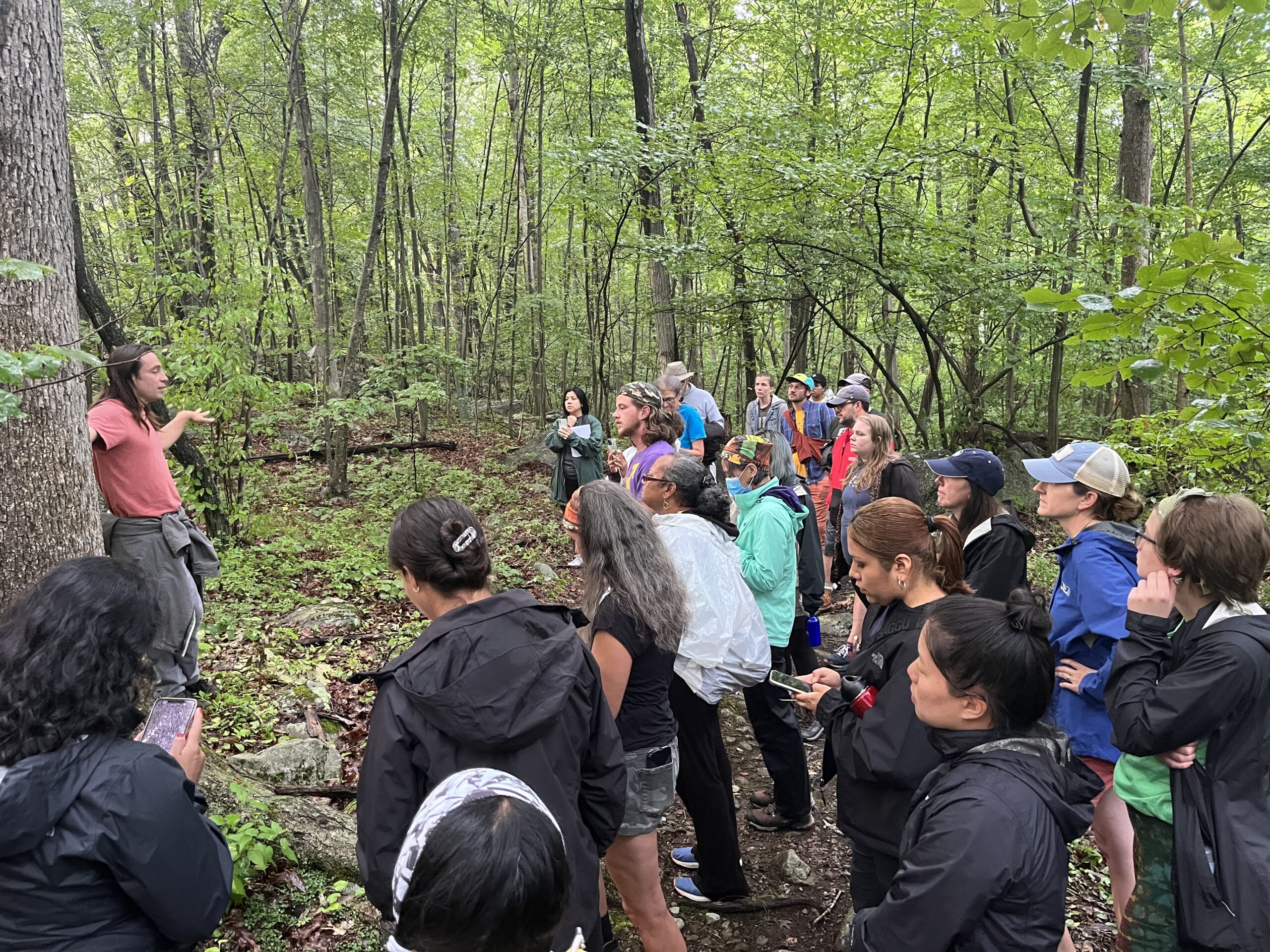
How to apply:
1. Download and review the Sample Application to understand what a strong application should include.
2. Visit our Teacher Resources webpage, especially the Watershed Forestry Essentials and Watershed Forestry Activity Kit, for background information and teaching resources about the 3 main program themes:
- Theme 1: Watershed form and function (e.g. what is a watershed, what defines a watershed and how does it function, why do watersheds need protection, etc.)
- Theme 2: Watershed trees and forests (e.g. what are forest ecosystems, how do trees & forests filter and protect water quality [in upstate drinking water watersheds and in downstate suburban/urban environments], what other benefits do trees & forests provide, etc.)
- Theme 3: The New York City water supply system (e.g. what are the different parts of the system, the history of its construction, how can we conserve water and help care for our drinking water watersheds, etc.)
3. Download the Field Trip Application and complete it electronically (hand-written applications will not be considered). Use the Field Trip Options and Guides, and Bus Company Contact List, to help with your planning and budgeting.
4. Complete the Administrative Support Form on the last page of the application. You may also download the Administrative Support Form separately.
Field Trip Options and Guides
IMPORTANT: For each Option below, click the FIELD TRIP GUIDE PDF link for detailed information about bus and programming costs, course options, and sample itineraries.
-
Option 1: Environmental Center & Reservoir Tour
Explore the NYC watershed at 1 of 5 Environmental Centers. Select programming from among the centers’ watershed forestry-themed courses listed below. At Clearpool and Frost Valley, you may choose to explore a Model Forests, which is a living classroom that demonstrates sustainable forestry practices for water quality protection. All trips include a guided visit to either the Cross River Dam and Reservoir (East of Hudson trips) or the Neversink Reservoir (West of Hudson trips). Teatown Lake Reservation hosts day trips only. All other centers host day and overnight trips.
East of Hudson Tour Options
Green Chimneys Clearpool Campus website
GREEN CHIMNEYS FIELD TRIP GUIDE (PDF)Taconic Outdoor Education Center website
TOEC FIELD TRIP GUIDE (PDF)Teatown Lake Reservation website
TEATOWN FIELD TRIP GUIDE (PDF)Fresh Air Fund’s Sharpe Reservation website
SHARPE RESERVATION FIELD TRIP GUIDE (PDF)West of Hudson Tour Options
Frost Valley YMCA & Model Forest website
FROST VALLEY FIELD TRIP GUIDE (PDF) -
Option 2: Trout In The Classroom Trout Release & Reservoir Trip
Trout in the Classroom (TIC) participants travel to Ward Pound Ridge Reservation in Westchester County in April or May to release their trout into the Cross River, which flows directly into the Cross River Reservoir that supplies drinking water to NYC. TIC and WAC educators lead customized watershed, forestry, and water quality activities that investigate the connection between healthy forests, trout habitat and clean drinking water. All trips include a guided visit to the nearby Cross River Dam and Reservoir. Maximum number of participants, including adults, is 112, or the capacity of 2 coach buses.
-
Option 3: Trees For Tribs Tree Planting & Reservoir Trip
Be an active steward of your watershed and help improve water quality by planting trees along tributaries (streams) that flow into NYC drinking water reservoirs! Trees for Tribs tree planting trips take place in late April or early May at sites across the Croton Watershed in Westchester and Putnam Counties. In addition to planting trees, WAC educators lead customized watershed, forestry, and water quality activities. All trips include a guided visit to the nearby Cross River Dam and Reservoir or New Croton Dam and Reservoir. Student groups must be 6th grade or higher. Maximum number of participants, including adults, is 56, or the capacity of 1 coach bus.
Trees for Tribs website
TREES FOR TRIBS FIELD TRIP GUIDE (PDF) -
Option 4: Adult Professional Development Trip
Witness the source of your drinking water and explore how well-managed forests protect water quality and support local economies in the NYC watershed. All trips include a guided visit to a NYC-DEP drinking water reservoir. We strongly recommend visiting one of WAC’s four Model Forests, which are living classrooms that demonstrate sustainable forestry practices for water quality protection. Other environmental or cultural sites may be included depending on group interests. Visit the Catskills Watershed Corporation’s Field Trip Ideas webpage for a list of great possible destinations throughout the watershed regions.
-
Contact:
For more information email Tyler Van Fleet, East of Hudson Forestry Program Coordinator, at education@nycwatershed.org.