Program Overview & Eligibility

Document Category: Agriculture

Program Overview & Eligibility

Program Overview

The Watershed Agricultural Council (WAC) partners with farmers to protect water quality while supporting the long-term economic viability of agriculture in the Catskill/Delaware Watersheds. Since 1993, the Watershed Agricultural Program (WAP) has helped more than 350 farms voluntarily implement conservation practices that reduce nutrient runoff, protect streams, and strengthen farm operations. 

Working in partnership with the NYC Department of Environmental Protection (DEP), U.S. Department of Agriculture (NRCS), Delaware County Soil and Water Conservation District, Cornell Cooperative Extension of Delaware County, the program delivers comprehensive whole farm planning, engineering, technical education, and financial assistance for best management practices (BMPs) that improve water quality and enhance farm productivity. 

Program Participation

The Watershed Agricultural Program (WAP) provides a voluntary, incentive-based framework for farmers located within the NYC West-of-Hudson Watershed to implement environmentally sound and economically viable agricultural practices. 
What the Program Offers

Participating farms receive comprehensive support at no cost, including:

Whole Farm Planning:

Technical planning using NYS Agricultural Environmental Management (AEM), NRCS, and locally developed evidence-based standards. 

Engineering & Design:

Site-specific design and construction oversight of structural BMPs (e.g., barnyards, manure storages, fencing, stream crossings).

Financial Assistance:

100% cost-share for eligible BMP implementation, including repair and replacement of existing systems.

Nutrient Management & Agronomic Support:

Soil testing, nutrient management plans, and assistance with cover crops, lime, and pasture improvements.

Ongoing Technical Education:

Long-term operation and maintenance support, plus access to education opportunities.

Program Goals & Metrics

The WAP measures success through: 

  • Over 350 Whole Farm Plans developed and implemented.

  • Invested more than $75 million on over 7,000 BMPs.

  • Historic farm participation of 90% of eligible operations within the watershed.

Who is Eligible

Participation is voluntary and free to eligible farms located within the New York City West-of-Hudson Watershed. 
To qualify, farms must:

  • Be located within the NYC Watershed boundary (farmstead and main production area).

    NYC Watershed Boundary Map

  • Complete a WAP AEM Tier I application and return it to the Agricultural Program office.

  • Be the owner or lessor of a farm operation, as defined by NYS Ag & Markets Law to enter the program. This includes but is not limited to:

    • Average annual farm sales of $10,000 gross over the previous two years on a minimum of 7 acres.
    • If less than 7 acres, farm sales must gross an average of $50,000
  • Livestock farms must maintain at least 5 Animal Units (A.U.s) and show capacity for proper manure handling.

  • Non-livestock farms must have at least 7 acres in production and meet the same income threshold.

  • Start-up farms may qualify by documenting the value of livestock or crops raised during the first 2–5 years, depending on commodity type.

  • Conservation Participants (e.g., CREP or CSBI) and certain leased watershed lands with active CNMPs may also be eligible for limited participation.

Enrollment in the Watershed Agricultural Program is based on eligibility, available program capacity, and annual prioritization of new Whole Farm Plans. Submission of an application does not guarantee immediate enrollment. New participants are added as resources allow and in accordance with program goals and funding commitments. 

Program Partners

WAC works collaboratively with: 

  • NYC Department of Environmental Protection (DEP) 
  • Delaware County Soil and Water Conservation District 
  • Cornell Cooperative Extension of Delaware County 
  • USDA Natural Resources Conservation Service (NRCS) 
  • USDA Farm Service Agency (FSA) 
  • NYS Department of Agriculture & Markets 
  • Local landowners, contractors, and stakeholders
  • Regional institutions and universities 
Continue reading

Prioritization

How Projects are Prioritized

Each year, the Watershed Agricultural Council and its partners follow a prioritization process to decide which Best Management Practices (BMPs) will be designed and built based on programmatic goals and contractual obligations.

This ensures that limited resources are focused on the projects that benefit water quality and farm operations consistent with program capacity.

The Process in Plain Terms

  • Project Grouping

    • Individual BMPs are grouped into projects when they function together.  For example, a liquid manure storage, access road, agitation pump, and spreader. 
    • Grouping BMPs improves efficiency, cost-effectiveness, and on-farm results. 
  • Pollutant Category Priority

    • Each BMP falls into one of the 11 pollutant categories . 
    • Projects addressing higher-risk categories and program goals are given top priority. 
    • These are typically Pollutant Category 1 (Parasites and Phosphorus – waste storage or barnyards), but also Pollutant Category 5 and 5.2 for USDA CREP and livestock exclusion projects because of their direct impact on stream protection and potential cost share.
  • Farm Ranking

    • As a way to compare farms to determine which projects advance first if program capacity and funding is reached, WAC will refer to a ranking score that measures a farms potential risk to water quality. 
    • Factors include animal density, soil phosphorus levels, proximity to streams, and livestock management practices. Data is typically updated annually from each farm’s Whole Farm Plan and Nutrient Management Plan, although farm ranking is not always needed to determine project order. 
  • Funding & Workload Planning

    • Each fall, a Project Planning Group led by WAC with representatives from DEP, DCSWCD and CCE review the list of all BMPs by pollutant category and recommend next years’ workload. 
    • The list of prioritized projects is reviewed by the Agricultural Program Manager to determine funding capacity and is presented to WAC’s Agricultural Committee for approval. 

Funding the Work

All approved BMPs are 100% cost-shared, meaning farmers pay no direct cost for eligible design and construction.

  • Funding Partners

    • New York City Department of Environmental Protection (DEP) 
    • USDA Natural Resources Conservation Service (NRCS), if farmers opt to pursue cost-share funding sources on their own. 
  • Funding Covers

    • Engineering design and certification 
    • Materials and construction 
    • Labor, contracting, and site restoration 
    • Eligible repair or replacement of existing BMPs 

    Projects are scheduled to match available funds, staff capacity, and the construction season. Emergency repairs may be added anytime if an urgent water-quality or safety concern arises. 

  • Transparency & Accountability

    Every BMP is tracked through WAC’s internal database and verified through: 

    • Design certification by a licensed engineer 
    • Construction inspection and documentation 
    • Post-construction evaluation during annual farm reviews 

    This process ensures that every dollar spent delivers improvements to water quality and long-term farm viability. 

Continue reading

Design and Construction Process

Best Management Practice Design and Construction Process

Once a project is prioritized and funded, WAC’s technical and engineering teams guide it through a structured design-to-construction process. This ensures each Best Management Practice (BMP) is safe, durable, and effective for the full lifespan required by NRCS and WAC engineering standards.

Step 1 – Site Evaluation & Consultation


A planner, engineer, and technician visit the site to review soils, drainage, animal traffic, topography, and other site conditions.

Test pits, surveys, and mapping may be conducted to guide design decisions.

Farmers discuss management needs, access, and construction timing. 

Step 2 – Design Development


Engineers develop detailed drawings, calculations, and cost estimates using AutoCAD and approved WAC templates. 

Designs progress through 30%, 60%, and 90% reviews before final certification by a Professional Engineer (PE) and ultimately signed-off on by the landowner participant. 

If the project is on an eased property, the WAC Easement Program reviews the plan for compliance. 

Step 3 – Procurement & Contracting


Certified designs move to WAC’s procurement team, which prepares bid documents for various bidding threshold processes. 

BMP contracts are facilitated by WAC on behalf of the landowner and require active participation from the landowner and contractor to work together. 

Projects with an engineer’s estimate up to $100,000 allow for the participant to select the list of contracts solicited for a bid. One contractor minimum is required for simple purchase (under $34,999) and a minimum of four for written quotes ($35,000-$99,999). Projects over $100,000 require public notice and site showing at the building location.

Bids are awarded to the lowest responsible, responsive contractor under WAC procurement policy.  

Farmers are involved throughout and informed of schedules and next steps. 

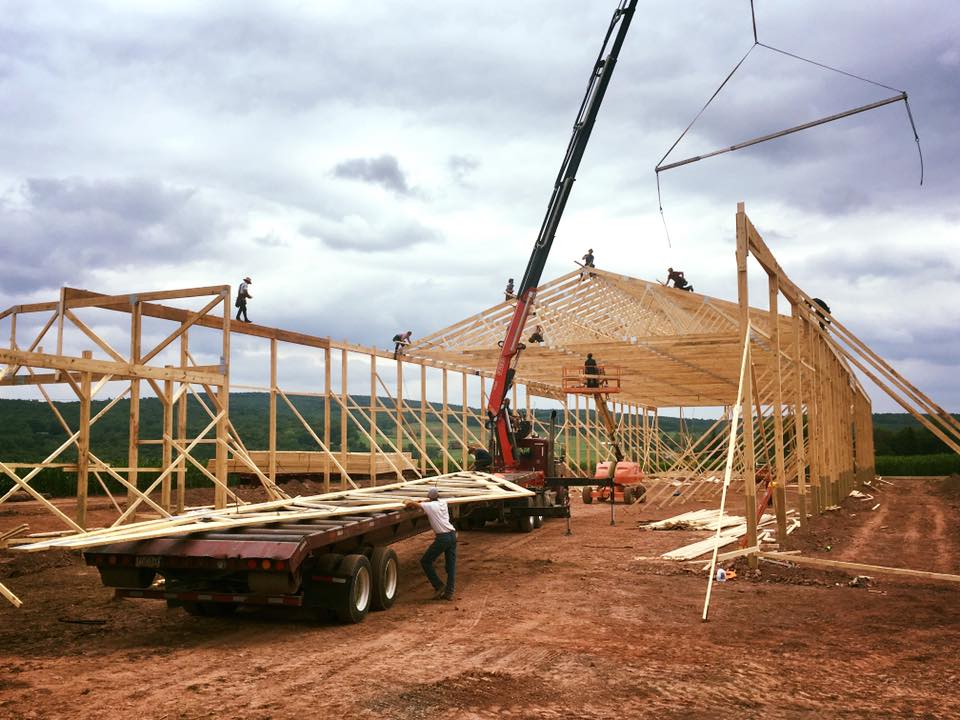
Step 4 – Construction & Oversight


Construction takes place during the main building season (typically April–November). 

WAC technicians serve as project inspectors, monitoring progress, materials, and workmanships. 

Key inspection points such as rebar tying, concrete pours, and stream work must be observed by staff.  All activities are documented in daily logs and photos. 

Step 5 – Certification & Operation


When construction is complete, the Certifying Engineer verifies the BMP meets all standards, along with final sign-off form the landowner participant. 

WAC would facilitate payment and the farmer would maintain ownership and be required to manage the BMP system in accordance with the Operation & Maintenance (O&M) Agreement outlining care and upkeep responsibilities. 

Step 6 – Repair, Replacement & Follow-Up


WAC maintains a Repair and Replacement Program for older or damaged BMPs that remain essential for water-quality protection. 

Projects are periodically inspected to ensure ongoing performance, safety, and compliance. 

Technical support is also available for any questions or issues that may arise related to farm operations and BMP functionality. 

Continue reading

BMP Categories and Benefits

A Comprehensive Approach to Water Quality

Every farm enrolled in the Watershed Agricultural Program develops and revises a Whole Farm Plan (WFP) over time based on their current operation.  This is a customized plan that identifies and addresses environmental risks through management and structural practices.

These risks are grouped into 11 pollutant categories, which help WAC organize, rank and design Best Management Practices (BMPs) that address water quality issues. 

The Pollutant Categories

Each pollutant category represents a different pathway for potential water quality impact. 

BMPs are designed to interrupt or reduce these pathways through proven conservation and engineering solutions.

  • Parasites & Phosphorus (Animal Waste Storage)

    Animal waste and runoff from storage areas can introduce nutrients and pathogens into nearby water. 

    • BMP Examples: Covered manure storages, roof runoff systems, leachate collection, vegetated treatment areas. 
    • Benefit: Prevents nutrient and bacteria runoff and extends manure spreading flexibility. 
  • Pesticides (Storage, Mixing & Loading)

    Improper storage or handling of pesticides near water can cause contamination. 

    • BMP Examples: Enclosed pesticide storage buildings, concrete mixing/loading pads, containment systems. 
    • Benefit: Reduces risk of pesticide spills and protects drinking water supplies. 
  • Phosphorus (Fertilizer Storage)

    Nutrient storage facilities can leach phosphorus if not properly managed. 

    • BMP Examples: Secure fertilizer storage, containment structures, covered bins. 
    • Benefit: Prevents fertilizer loss and protects surface and groundwater quality. 
  • Parasites – Animal & Manure Management

    Livestock areas can be direct sources of bacteria and pathogens if unmanaged. 

    • BMP Examples: calf facilities, runoff controls, manure storage. 
    • Benefit: Reduces direct livestock access to streams and improves herd health. 
  • Nutrient Management

    Nutrients applied to fields can be lost through runoff or leaching without proper planning. 

    • BMP Examples: Nutrient Management Plans, laneways, crossings 
    • Benefit: Improves soil fertility and ensures nutrients stay where crops can use them. 
  • Nutrient Management – CREP (Conservation Reserve Enhancement Program)

    Combines nutrient management planning with buffer and exclusion practices under the CREP program. 

    • BMP Examples: Streamside fencing, riparian buffers, livestock exclusion with alternative watering systems. 
    • Benefit: Filters runoff, stabilizes streambanks, and creates wildlife habitat. 
  • Nutrients – Concentrated Sources

    Areas where manure, feed, or waste are concentrated can become hot spots for nutrient loss. 

    • BMP Examples: Feed pad management, silage leachate controls, composting facilities, vegetated treatment areas. 
    • Benefit: Keeps nutrients contained and prevents localized pollution. 
  • Sediment – Concentrated Sources

    Heavy use areas and disturbed sites often generate sediment-laden runoff. 

    • BMP Examples: Heavy Use Area Protection (HUAP), stabilized driveways and laneways, sediment basins. 
    • Benefit: Prevents erosion and sediment from reaching nearby streams. 
  • Sediment – Diffuse Sources

    Erosion across cropland and pastures can reduce soil productivity and degrade water clarity. 

    • BMP Examples: Cover crops, conservation tillage, contour farming, grassed waterways, buffer strips. 
    • Benefit: Keeps soil in place, increases organic matter, and enhances infiltration. 
  • Pesticides – Field & Animal Application

    Over-application or improper timing of pesticides can affect ecosystems. 

    • BMP Examples: Integrated Pest Management (IPM), calibrated sprayers, vegetated buffer zones. 
    • Benefit: Reduces pesticide runoff and supports pollinator and aquatic health. 
  • Fuel & Other Materials

    Improper handling of fuels, oils, and other farm chemicals can lead to localized contamination. 

    • BMP Examples: Fuel containment pads, secondary containment tanks, secure hazardous material storage. 
    • Benefit: Prevents spills and protects wells and waterways.

Why These Categories Matter

By aligning every BMP with one of these 11 pollutant categories, WAC ensures a comprehensive, risk-based approach to whole farm planning. This framework helps prioritize projects that deliver the greatest environmental return on investment while improving daily farm management. 

Repair & Replacement

Continue reading

Nutrient Management Credit

Nutrient Management Credit (NMCredit)

Following a NMP can be difficult for some farms. To offset the additional time and cost it takes to implement a NMP, the Nutrient Management Credit (NMC) Program was created. NM Credit is an incentive program that rewards farmer’s willingness to spread manure according to a Nutrient Management Plan.

The NM Credit Program encourages heightened stewardship of manure resources to improve water quality and provides the Watershed Agricultural Program a means to enhance implementation of Nutrient Management Plans (NMPs).

Farmers eligible to enroll in the NMC program keep record of their manure management and turn in manure spreading records annually, at which time a group of peers reviews and approves each farms credit award. NM Credit balances are used to reimburse farmers for Nutrient Management related expenses. Eligible expenses include items such as manure spreaders, barn cleaners, custom services, and lime.

In 2020, farmers earned $10.00 per acre and around $12 per animal unit. 142 farms participated in the NM Credit Program and earned roughly $550,000 in credits that they can utilize to reimburse nutrient management related expenses.

Want more information on Nutrient Management?

Cindy McCarthy, CCA

NMTeam & PFM Coordinator, Watershed Agricultural Council

Address: 44 West Street Walton, NY 13856
Phone: 607-865-7090
Fax: 607-865-5535

Feel free to contact our NM Planning Staff with additional questions regarding Nutrient Management.

Continue reading

Planning Tools & Templates

Educational Tools:

Want more information on Nutrient Management?

Cindy McCarthy, CCA

NMTeam & PFM Coordinator, Watershed Agricultural Council

Address: 44 West Street Walton, NY 13856
Phone: 607-865-7090
Fax: 607-865-5535

Feel free to contact our NM Planning Staff with additional questions regarding Nutrient Management.

Continue reading

Precision Feed Management

What We Do

Precision Feed Management (PFM) is designed to engage farmers in a recurring process of planning, implementation and monitoring of the largest source of nutrients on the farm – feed nutrients. Our reasons for implementing PFM are to improve animal productivity, improve profitability and to reduce nutrient accumulations on the farm. PFM is an ongoing management BMP and will be executed differently for each farms’ individual goals.

From the animal side, we help farmers and their feed nutritionists implement more tightly formulated diets that avoid overfeeding of nutrients and maximize use of homegrown nutrients. We also help them maintain healthy, comfortable and productive animals that convert feed nutrients into milk and meat more efficiently and increase exports of nutrients off the farm in milk and animal sales.  

From the crop production side, we help farmers produce a larger quantity of higher digestible homegrown feed nutrients, which sets the stage for importing fewer purchased feed nutrients and increasing milk or meat production and milk or meat nutrient exports.

Originally a program focused on dairy, in 2020 Beef Precision Feed Management was designed, 18 farms were enrolled, and implementation began. Though it is the newest branch of the PFM program, we expect it to grow rapidly.

Check out the following Success Stories for PFM: Boots in the Barnyard: Dar-View Farm, Boots in the Barnyard: Springdale Farm

PFM Planning and Implementation

PFM in the NYCWAP consists of 2 primary efforts; Planning and Implementation. The planning phase consists of constructing Feed Management Plans according the NY-USDA-NRCS 592 Feed Management Planning Standard. These Feed Management Plans are renewed every three years for a farm. The PFM planner also engage each farm in annual Quality Management Assistance goal setting. This helps the farmers focus on annual goals and helps the PFM planners know where they can assist the farm.

The Implementation efforts include both technical assistance provided by the PFM planners to the farmers to implement their annual animal and crop production goals as well as regular monitoring of animal performance and diets. The monitoring of animals and diets is at the core of the quantification and documentation of dietary nutrient management and impact our program has on managing manure nutrient excretions and whole farm mass nutrient dynamics.

The PFM monitoring, also known as PFM Benchmarking consists of a process where our PFM Planners visit each of their farms quarterly or more frequently as needed. On these visits the planner works with the farmer to gather data on the cattle and feeds being offered, as well as take samples of each feed. These samples are sent out to DairyOne, Cumberland Valley Analytical Services, or Rock River Labs to be analyzed. Once the results are back, the planner takes this feed and cattle information and inputs it into our benchmark software to generate a benchmark for a given point in time. These benchmarks are assessed to identify dietary and animal trends and identify opportunities for improvement. When collected over time, these benchmarks show trends in a herd and help the PFM program track impact and plan future program efforts.

PFM Impacts by the Numbers

2025 was the tenth year of Precision Feed Management implementation in the region. PFM planners worked with 54 dairy and beef farms and 3038 cows total. For the 1846 dairy cows, on 31 farms, monitored by PFM, the total amount of feed phosphorus (P) and nitrogen (N) under PFM management was 53,432 lbs. of P and 370,564 lbs. of N, with visible reductions from the year prior. Precision Feed Management with beef farms has grown significantly in the past few years.  With that growth, beef farm phosphorous and nitrogen metrics are actively being developed.  The PFM team is using herd monitoring, forage analyses, and diet modeling to create PFM benchmarks for farms in the region.  Currently, the pools of phosphorus (P) and nitrogen (N) represent an extremely large amount of P and N under management through Precision Feed Management program.

  • 31

    Dairy Farms

  • 21

    Beef Farms

  • 3038

    Cows

Beef PFM

Beef cattle production in the NYC watershed is a major agricultural enterprise which involves 57% of the farms and 34% of all the animal units enrolled in the NYCWAP included in the NYC watershed, Delaware County alone is ranked #2 out of all counties in New York for beef production.

Research has shown and local data has confirmed that beef cows excrete more phosphorus in their manure that dairy cattle of similar size.

Thus, there exists a significant opportunity to manage the nutrient mass balances and potential nutrient losses on beef farms for the purpose of protecting the water quality in the NYC reservoir system. This will help a major sector of the farm community to meet their goals, be sustainable and thrive in the watershed!

Beef PFM Program Objectives

  • Minimize overfeeding of phosphorus & nitrogen to beef herds.
  • Facilitate producer education with the adoption of herd management practices.
  • Achieve a feasible reduction in phosphorus mass balance with the participating farms.
  • Have a positive impact on both the environment and economic viability of the farms participating in the program.

Currently the NYCWAP PFM program is working with 18 beef herds as we pilot development and implementation of PFM for beef herds.

Quality Management Assistance (QMA) Impact Reports

Click on the following links for success stories/examples of impact reports.

Feed Management Planners

Meghan Potter

PFM Team Leader

April Wright-Lucas BS, CCA, PAS – PFM

PFM Specialist

Shylabeth Taylor BS

PFM Specialist

James Romack MS

PFM Specialist

Continue reading