BUSINESS PLANNING AND FARMS & FORESTS IN TRANSITION PROGRAMS
Business Planning: To support the development of professional economic viability business plans for NYC West of Hudson Watershed farm or forestry businesses in order to better position these businesses for improved economic profitability and sustainability. Funding:$2,000 per applicant per fiscal year.
To view eligibility and to apply online please visit us here.
Farms & Forests Transition Reimbursement Program:
Our goal is to support farm operations with property inside the NYC West of Hudson Watershed seeking professional services in transition, estate planning or succession planning! Funding: $5,000 per applicant per fiscal year.
To view eligibility and to apply online please visit us here.
Open Enrollment: The Watershed Agricultural Council will be accepting applications on a rolling basis for both of these programs.
SOIL SAMPLING
We are currently advertising for our Nutrient Management Soil Sampling Interns who will be visiting many of our NYC Watershed farms this summer. Our interns will start sampling at the end of May and will continue into August. They plan to sample 1600+ fields.
All of our soil samples are sent to the Dairy One AgroOne lab in Ithaca, NY. As results come back, Nutrient Management Planners update field maps and send sample results and new spreading maps to the farms that were soil sampled.
For more information on Soil Sampling check out this brochure.
To learn more about becoming an intern this summer click here.
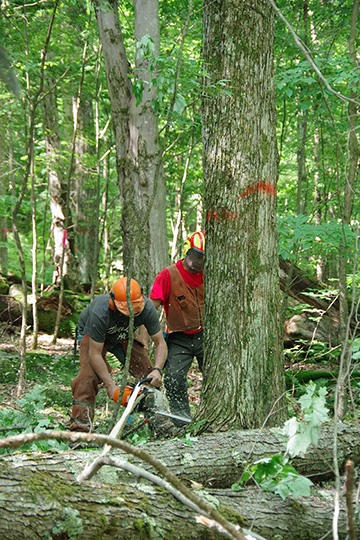
TRAINED LOGGER CERTIFIED CLASSES
It’s mud season – now is the time to take some TLC classes!
We have 2 core classes coming up with some availability:
April 8th: Game of Logging Level 1 (Catskills Area)
April 9th: Forest Ecology & Silviculture (Hamden, NY)
Call 518-622-9820 to register.
And a Continuing Education class:
April 29th: Stream Crossings & Permits (Conesville, NY)
Email our team if you have any changes or if you would like to be listed under a different category.
Memberships are due Monday, March 28th. NO EXCEPTIONS!
FORESTRY MAP PROGRAM
Did you know that the WAC’s Forestry Program has funding to help offset certain woodlot expenses? The Management Assistance Program (MAP) provides cost-share funding to landowners to help cover, or partially cover the cost of some common woodlot activities. The MAP Program is intended to help landowners carry out stewardship projects on their land.
If you are interested in applying to this program, or would like to see the full list of accepted practices, please download the application or visit the MAP website.
Read these stories and more by checking out the the February 2022 News from the Watershed Agricultural Council!
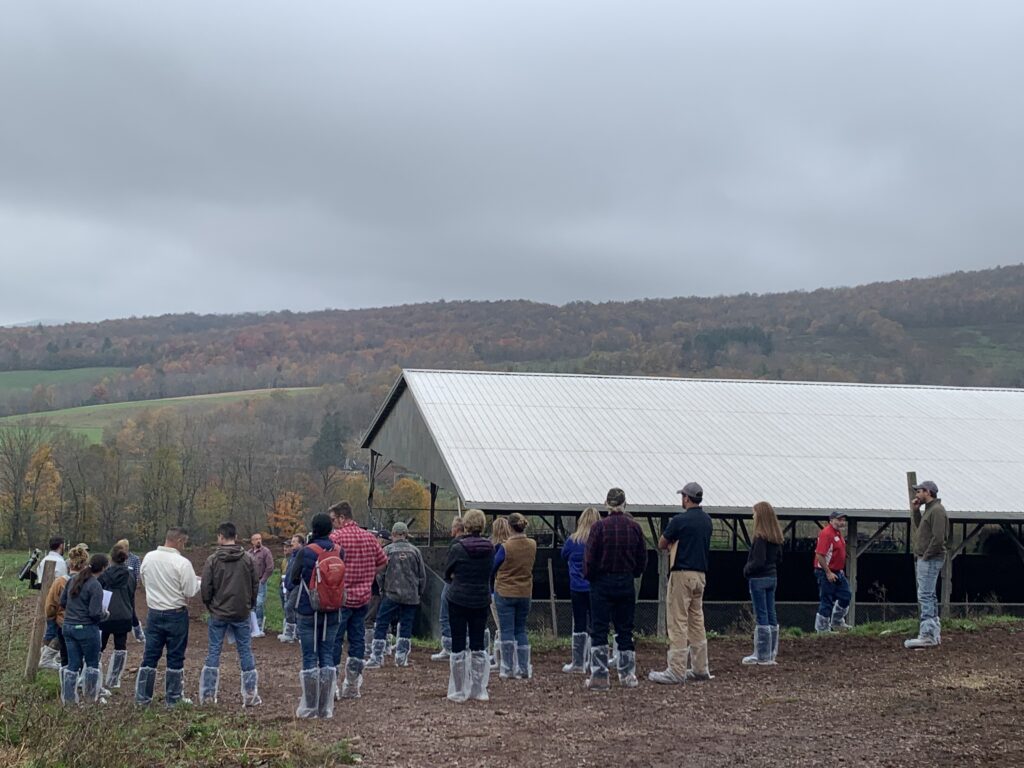
We are happy to report many events and farm tours occurred in 2021. The Watershed Agricultural Council (WAC) hosted an array of farm tours in the NYC Watershed and attended a handful of events.
The WAC hosted three tours in October. The Food, Water and Climate Farm Tour was held October 4th and we were a guest speaker at Lucky Dog Farm in Hamden, NY. This tour had 25 legislative members as guests. On October 14th, the WAC Agricultural Program hosted their annual program tour with 38 attendees. The group visited Webcrest Farm in Bovina, NY, Black Willow Morgans in Delhi, NY and Burn Ayr Farm in Delhi, NY. On October 18th, 20 graduate students from the Bard College of Environmental Policy visited Byebrook Farm. in Bloomville, NY where they learned about our programs as well as the farm’s history.
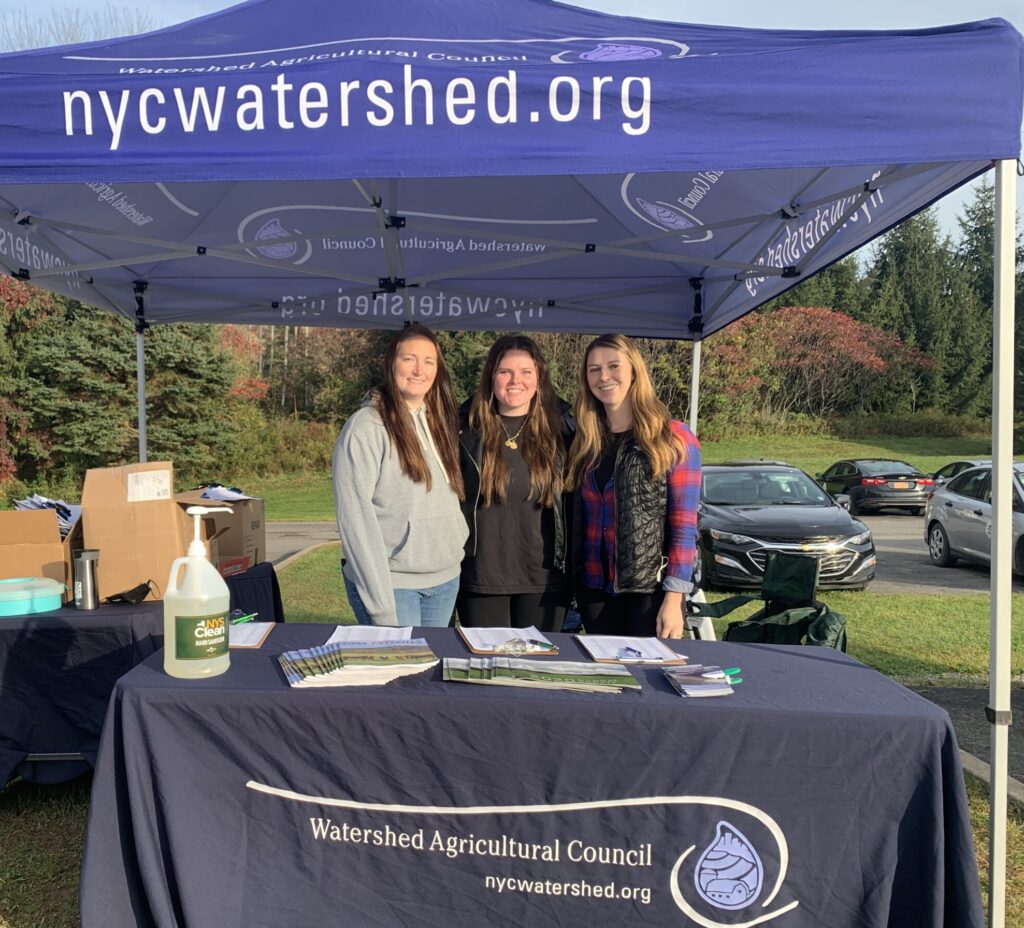
Pure Catskills attended events in 2021 including the Delaware County Fair (in WAC’s tent), Cauliflower Festival in Margaretville, NY and the Delhi Harvest Festival in Delhi, NY. Many events early in the season were cancelled due to Covid-19 restrictions, as were some of the larger fall events like Taste of the Catskills.
The Delaware County Fair was as large as ever with over 77,000 visitors throughout the week. The Delaware County Clean Sweep Event celebrated its 25th year. It was sold out again this year and there was a record number of participants overall. WAC pays for the disposal for all of the waste brought in by farms in the eight NYC Watershed counties to the event.
While many events did happen in 2021, we are looking forward to even more in 2022!
Nutrient Management Planning
A Nutrient Management Plan (NMP) determines where, when and how much compost or manure can be spread on a farm with minimal risk of phosphorus and pathogens entering a water supply. Watershed Agricultural Council (WAC) Planners work with program participants to create a plan based on the specific nutrient needs, landscape and infrastructure of each farm. NMPs are based on the USDA NRCS Conservation Practices and the New York Phosphorus Index.
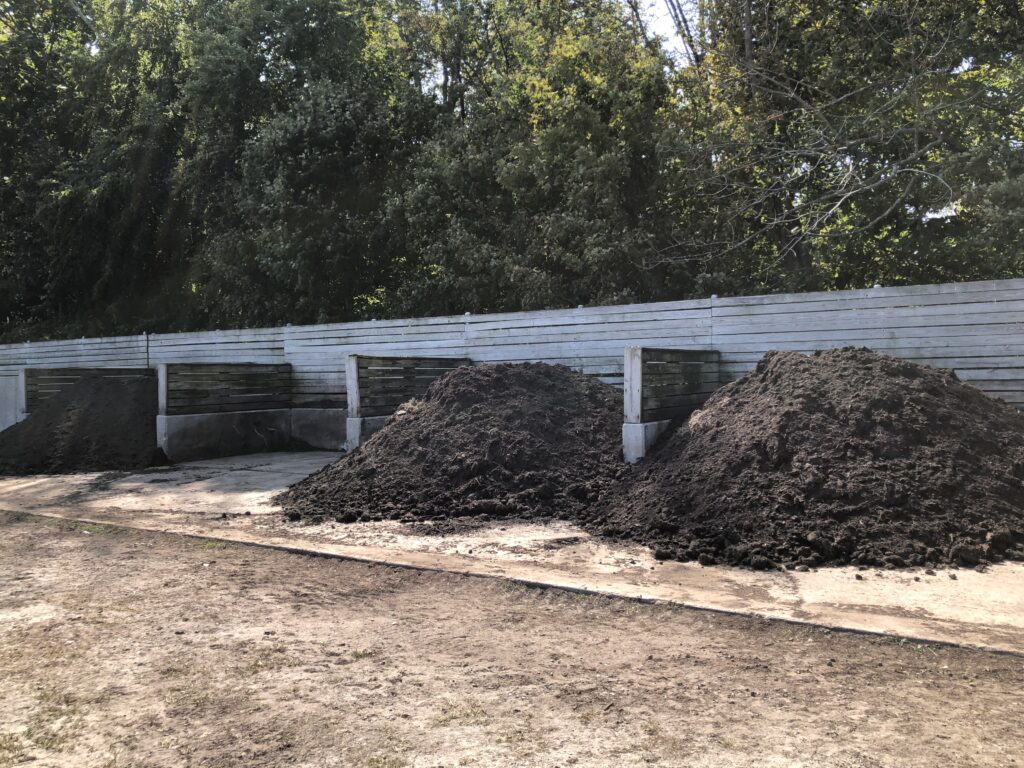
NMPs begin with soil sampling and compost analysis which are collected by East of Hudson (EOH) staff every three years and provide the basis for a farm’s NMP.
The plan summarizes the nutrient balances for each farm field, and provide recommendations on soil amendments and fertilizer inputs. In addition to soil sampling results and compost analysis, a NMP also includes farm maps which outline land use, soil data, field fertility, slope, flow paths, and manure spreading load and timing allowances.
This year EOH implemented NMPs on seven farms, Pine View, Stony Creek, Muscoot, Acadia, Big Elm, Hemlock Hill and Snow Hill Farm. The NMP prepared by the WAC at Muscoot is a component of the NYS Climate Resilient Farming Grant received by the farm to improve the farm’s resiliency and mitigate greenhouse gases. Hemlock Hill’s NMP is a component of the farm’s NRCS Regional Conservation Partnership Program project that will be addressing nutrient concerns at the farm. The NMP at Snow Hill assisted the farm with completing its National Organic Farmers Association-NY Organic Certification.
EOH NMPs are helping farms protect drinking water by preventing the loss of nutrients to surface and groundwater, build soil fertility, increase soil organic matter and carbon and improving the utilization of nutrients and production efficiency on farms.
East of Hudson Technical Assistance Program
In response to an increase in the severity and frequency of storms experienced in the NYC Watershed, a number of EOH participants have expressed an interest in improving their farm infrastructure. The EOH Program has been working with these participants to provide technical assistance for farm-implemented projects designed to enhance farm resiliency, improve production and protect water quality. The EOH Engineering Team has developed a site plan and designs for two new wells at Snow Hill Farm. The new water supply will be used for the farm’s organic vegetable production and will alleviate pressure on the single well currently being used for the entire property. EOH has also worked with Faraway Farm to design and assist with implementation of new waterers for the alpacas. The farm selected non-electric geothermal waterers which do not require electricity to prevent freezing in winter and will keep water cooler in the summer. With the WAC providing technical assistance, EOH farms are able to improve their farm operations and increase their resiliency.
East Of Hudson Program Stats: 80 Whole Farm Plans •• 7,305 Acres •• 803 BMPs Completed to Date •• 1,775 Acres under Nutrient Management Planning
This past year continued to present loggers, forest landowners and foresters in the NYC Watershed with unprecedented challenges. The Watershed Agricultural Council (WAC) Forestry Program adapted to meet these challenges with the help of our program participants.
Every school year, over 1,000 students from New York City boroughs and Watershed counties are brought into the Watershed to explore the farms and forests that keep their drinking water clean. These field trips include stopping at a reservoir and other outdoor educational experiences, like visiting Clearpool or Frost Valley Model Forest. During the COVID-19 pandemic, traditional bus tours came to a halt, so the WAC forestry team created virtual bus tours that allowed for social distancing and environmental education.
On all of the 40 virtual bus tours that were conducted, the WAC staff Zoomed into a class from two different locations in the Watershed; a reservoir and a forest. We talked to students about Watershed history and their drinking water supply from the reservoir, and then lead an activity or experiment from the woods. Activities focused on the relationship between forests and water quality, and were tailored to suit the needs and abilities of each class. These included erosion demonstrations, watershed models, water quality testing and more. To balance out our time on Zoom, we utilized digital spaces where students could ask questions and leave comments about the virtual tours. For some students, the trips were a way to get outside when they were otherwise told to stay home. One 6th grader from Staten Island wrote, “My favorite part of the trip was getting to see the beautiful water, trees and river. I love the nice scenery when I am stuck inside.”
Forestry Program Stats: 5,535 Acres Enrolled in 480a •• 45 Timber Harvests with BMPs •• 55 Forest Stewardship Projects on 420+ Acres •• 40 Virtual Bus Tours •• 21 Watershed Forestry Institute for Teachers Participants
JJF Farm
This year we are proud to highlight JJF Farm’s evolution and involvement in the Economic Viability Program. JJF Farm started as a dairy farm in 1964. The farm is owned by John and Beth Verhoeven and is located on Route 23C between the Hunter and Windham ski slopes. It is not only a pilot Watershed Agricultural Council (WAC) farm that has participated in multiple programs since the WAC’s inception, but has also been a Pure Catskills member since the start.
In 2005, they decided to switch to beef choosing to raise Angus cattle. Seeing the potential for direct marketing, they started a farm store to sell products produced on the farm. Angus are known for their ease of calving, fast finishing, and marbling. Over the years they have figured out just the right process to get beef that is high-quality and consistent.
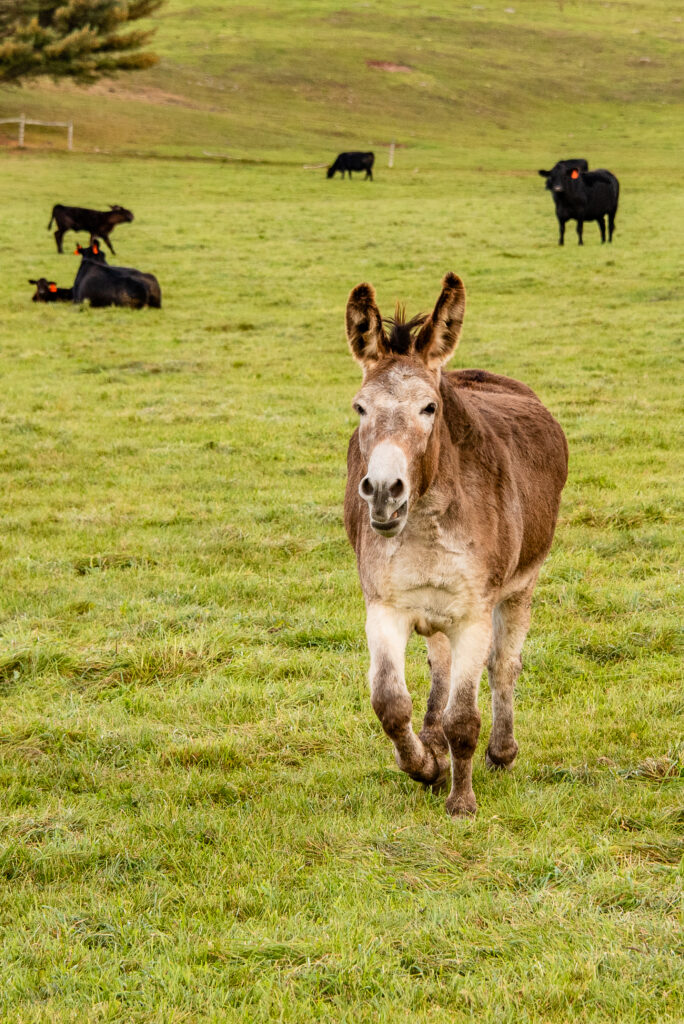
The farm store opened in 2009, and grew slowly by adding cattle and acreage. Today, JJF Farm has over 200 head of cattle and they market everything through the store. Their beef is pasture-raised, grain-finished, hormone and antibiotic free. They have also added pork and chicken to their operation. Visitors can see the chickens out in the chicken tractor all summer long, grazing on grass and bugs. All of the meats are cryovac and frozen.
“We have certainly benefited from more business and we are constantly recommending other members for products we don’t carry. People like to come and see the animals, especially the cows with calves. Our guard donkey Wilbur is also a big attraction and if you are lucky, you can get to hear him bray. Our hours are from 9 AM–5 PM, Thursday through Monday.”
—John & Beth Verhoeven
Join Pure Catskills
For more information on Pure Catskills or to become a member visit: purecatskills.com
Economic Viability Program Stats: 311 Pure Catskills Members •• 5+ Watershed Events
Conservation Easements by definition are perpetual. Stewarding the land is a role that never ends, both for our staff and for our landowners. The Watershed Agricultural Council (WAC) Stewardship staff had another busy year working closely with current easement landowners, and an influx of new easement landowners to process multiple and unique reserved rights requests. 2021 proved to bring forth new ideas as easement landowners adjusted their operations to the ever changing landscape. Stewardship staff processed multiple reserved rights requests, worked closely with Agricultural Program staff to review Best Management Practice designs, stewarded active timber harvests, and communicated with real estate agents and new potential landowners to address any easement related questions as they explored purchasing an eased property. We are looking forward to working with new landowners as they explore various agriculture related enterprises.
PRESERVING A LEGACY—THE TRUESDELL FARM
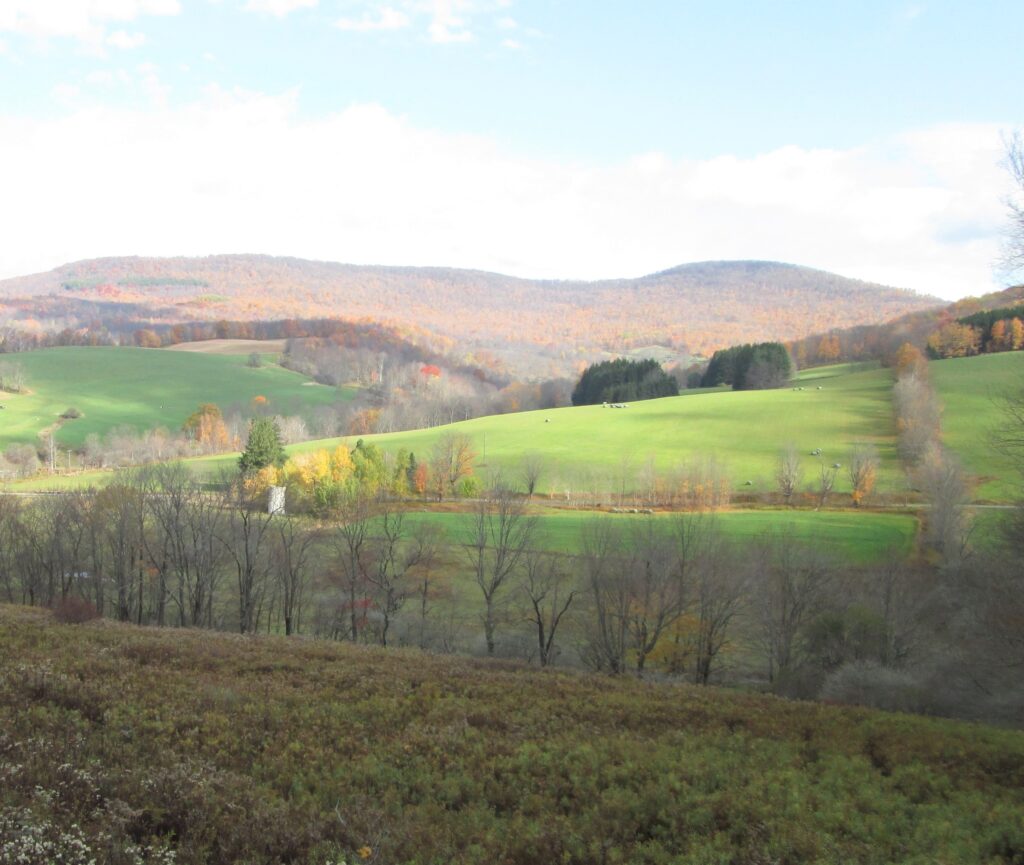
WAC added an additional 343 acres of land to its portfolio. A closing not without obstacles due to a pandemic, austerity measures, and even the fragility of life itself delayed this transaction.
Sadly Tom Truesdell wasn’t here to see it to fruition but as Cindy, the administrator of his estate, stated, “All farmers have a connection to their land. He never wanted to see it developed.”
We thank her, and Bobby, for honoring Tom’s legacy and are very pleased to see the “Upper Farm” on Roses Brook forever conserved.
Conservation Easement Program Stats: 32,210 Acres •• 12 Active Forest Harvest Plans •• 14 Bluestone Mines open •• 13 Right of Ways processed •• 20 Subdivisions, Rural Enterprises and Stream Work Requests •• 11 Tower & Communication Devices
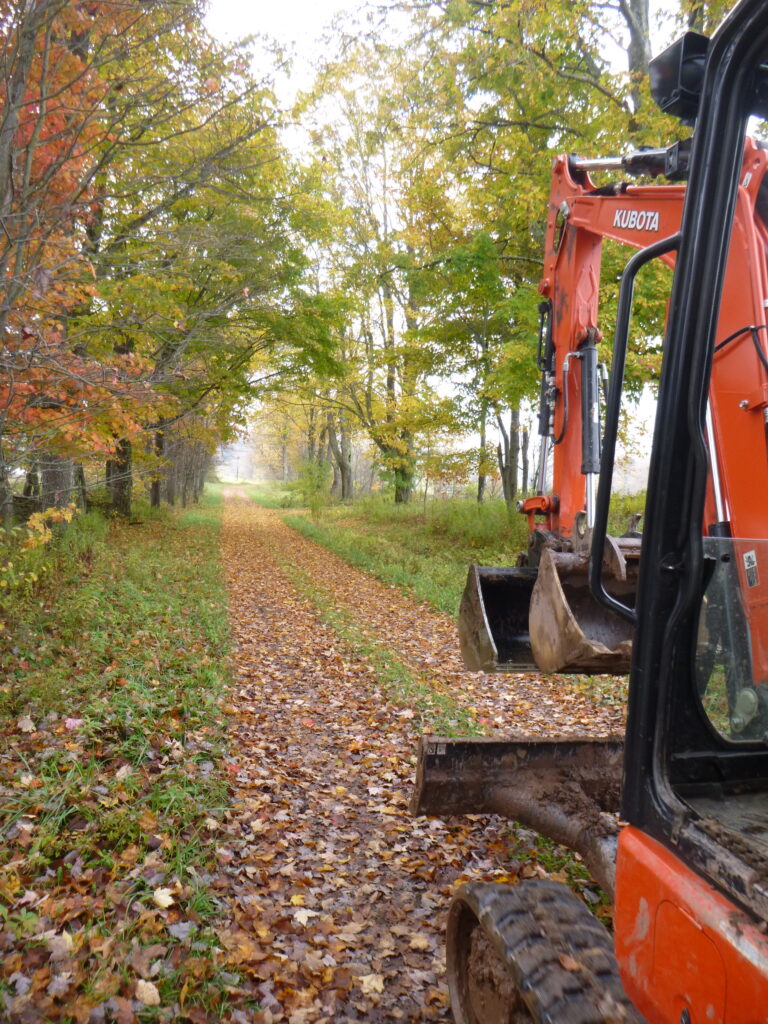
The Watershed Investigation and Repair Crew (WIRC) was designed, approved and implemented in the late fall of 2017 to perform real time responses to urgent assistance requests from Watershed Agricultural Program (WAP) participants addressing potential water quality threats within the West of Hudson Watershed region.
The WIRC staff provides safe investigations of in field issues, potential recourse concerns of non-functioning Best Management Practices (BMPs) working directly with participants and WAP staff to rectify these issues. This can be done through enhanced education and support of the proper operation and maintenance (O&M) or function of a BMP, or through modifications to the structural BMP. If BMPs are deemed to be operated as intended and have failed or are not functioning as designed and expected, a repair may be approved. If the failure is creating a water quality concern or has negative effects on the performance of the BMP or farm’s operation, then the pending repair may be deemed an Emergency Repair for immediate attention.
The crew is comprised of one to two existing WAP full time employees whom have received proper training and certifications to perform these in field hands on tasks.
Another major goal of the WIRC is to provide quick, efficient and detailed procurement with a timely repair response to failing BMPs at a fraction of the cost as seen by our local contractors offering past similar repairs.
2021 WIRC Stats: Fourth Year of Operation •• 192 BMP Investigations •• 40 No Cost Repairs/Support •• 60 Structural Repairs of existing BMPs
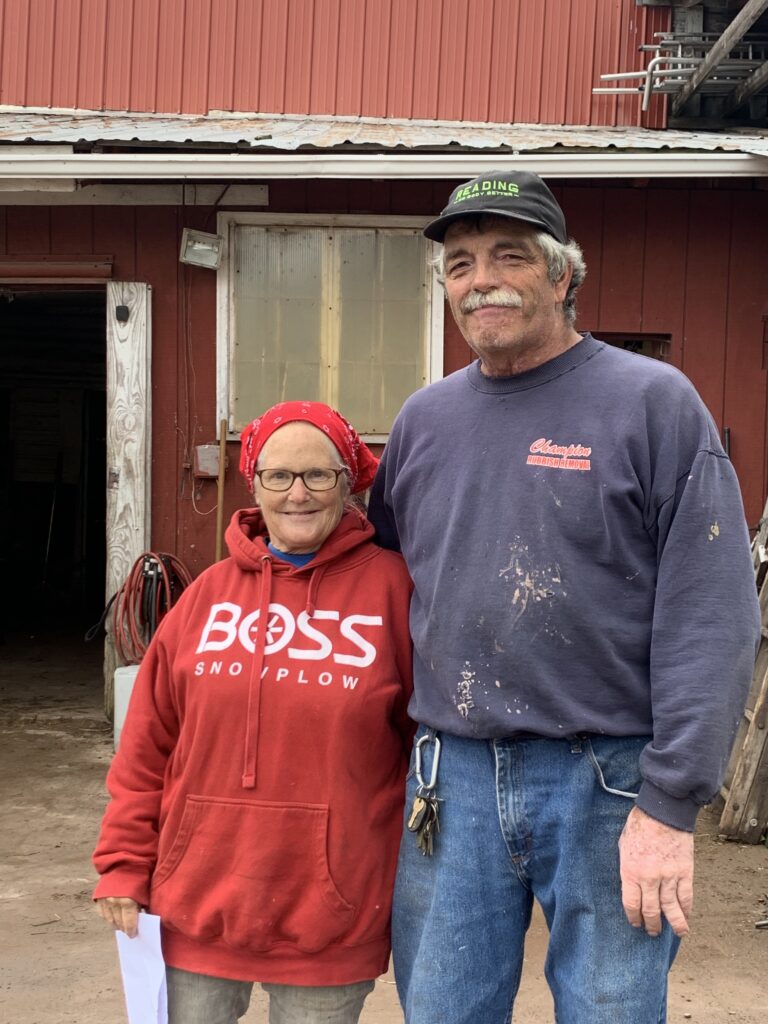
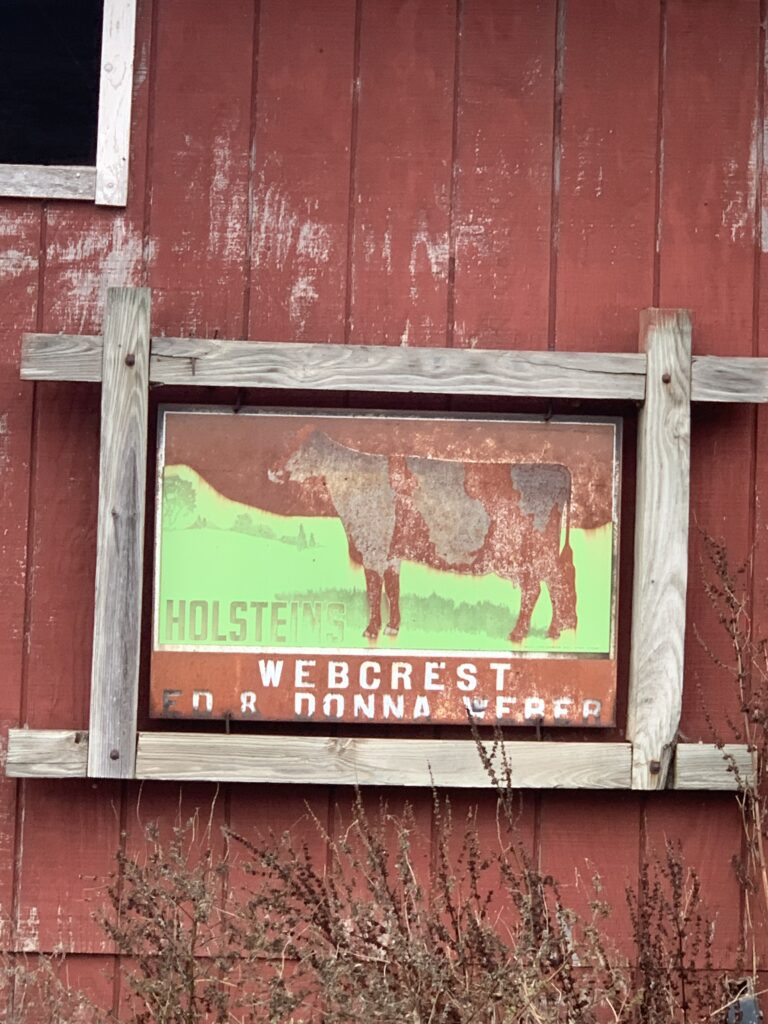
Webcrest Farm is a 275-acre dairy farm located at the headwaters of the Little Delaware River in the town of Bovina, and has been a part of the Watershed Agricultural Program since 1996. The farm is owned and operated by Ed and Donna Weber, along with their son and daughter-in-law Cody and Carrie Weber. The dairy herd consists of 50 milk cows and 46 replacement youngstock. The Weber’s manage an intensive rotational grazing pasture system and grow all of their own forage consisting of alfalfa/grass hay and haylage, as well as corn silage. Webcrest Farm is enrolled in the Precision Feed Management Program and the Nutrient Management Credit Program. The farm property also has a WAC Conservation Easement.
Calf Housing
Currently, there is a calf housing structure BMP under construction that is a Repair & Replacement BMP, which is being constructed on the site of the original facility built in 1996-97. The original calf housing BMP was a greenhouse structure designed with a 10-year lifespan. With proper operation and maintenance by the Weber’s, it remained in service as an effective BMP for 25 years. The new structure is a timber frame building with individual pens for calves 0-3 months old and group pens for calves 4-6 months old. This is an important water quality BMP because it reduces the risk of pathogens entering the NYC water supply. Water quality protection is achieved by providing a clean, dry, well-ventilated environment for calves, which improves overall health, thereby reducing the shed of pathogens such as cryptosporidium. Another key feature of the new calf housing is the inclusion of a covered manure stacking area. This allows the manure from the calves to be separated and static piled, where it can naturally heat up to destroy the pathogens. Calf manure can then be spread in locations identified in the Nutrient Management Plan where there is low risk of runoff to a watercourse.
Precision Feed Management
For several years it has been a Precision Feed Management goal of the Weber’s to feed corn silage year-round, especially in the summer grazing months. When corn silage is digested in the cow’s rumen, it cools the animal down, in comparison to grass silage, which heats the animal up when digested. This makes corn silage a very beneficial feed in the warmer months.The starch in corn silage also allows the protein in grass to be utilized more efficiently. After establishing growing enough corn to feed year-round as a goal, the Webers worked with their planner to make it happen. This year they planted a few more acres of corn, had a great growing year, had equipment readily available to them, and now have plenty of corn silage to feed over the next year. We look forward to seeing how this positively effects protein efficiency and milk production in the next grazing season.
2021 Ag Program Stats: 258 Active Farms •• 150,000 Acres •• 47 Educational Events •• 1,436 Projected Cover Crop Acres


 BUSINESS PLANNING AND FARMS & FORESTS IN TRANSITION PROGRAMS
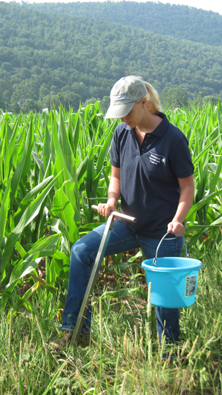 sampling at the end of May and will continue into August. They plan to sample 1600+ fields.
 TRAINED LOGGER CERTIFIED CLASSES

 We are happy to report many events and farm tours occurred in 2021. The Watershed Agricultural Council (WAC) hosted an array of farm tours in the NYC Watershed and attended a handful of events.
 this year and there was a record number of participants overall. WAC pays for the disposal for all of the waste brought in by farms in the eight NYC Watershed counties to the event.
 NMPs begin with soil sampling and compost analysis which are collected by East of Hudson (EOH) staff every three years and provide the basis for a farm’s NMP.
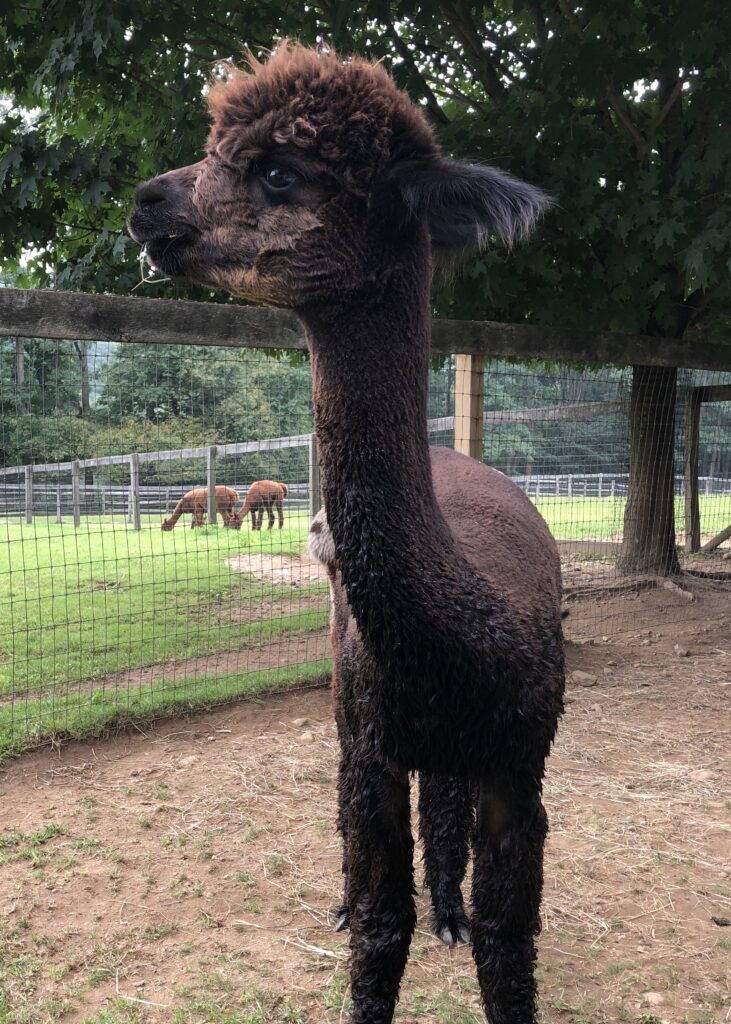 infrastructure. The EOH Program has been working with these participants to provide technical assistance for farm-implemented projects designed to enhance farm resiliency, improve production and protect water quality. The EOH Engineering Team has developed a site plan and designs for two new wells at Snow Hill Farm. The new water supply will be used for the farm’s organic vegetable production and will alleviate pressure on the single well currently being used for the entire property. EOH has also worked with Faraway Farm to design and assist with implementation of new waterers for the alpacas. The farm selected non-electric geothermal waterers which do not require electricity to prevent freezing in winter and will keep water cooler in the summer. With the WAC providing technical assistance, EOH farms are able to improve their farm operations and increase their resiliency.
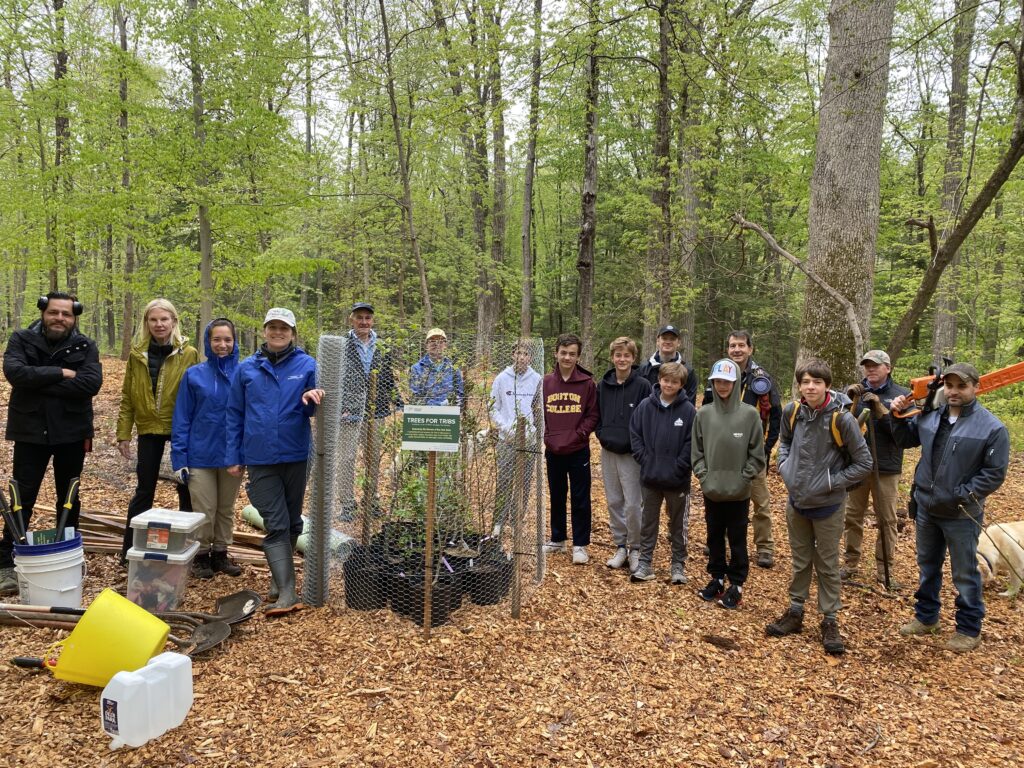 This past year continued to present loggers, forest landowners and foresters in the NYC Watershed with unprecedented challenges. The Watershed Agricultural Council (WAC) Forestry Program adapted to meet these challenges with the help of our program participants.
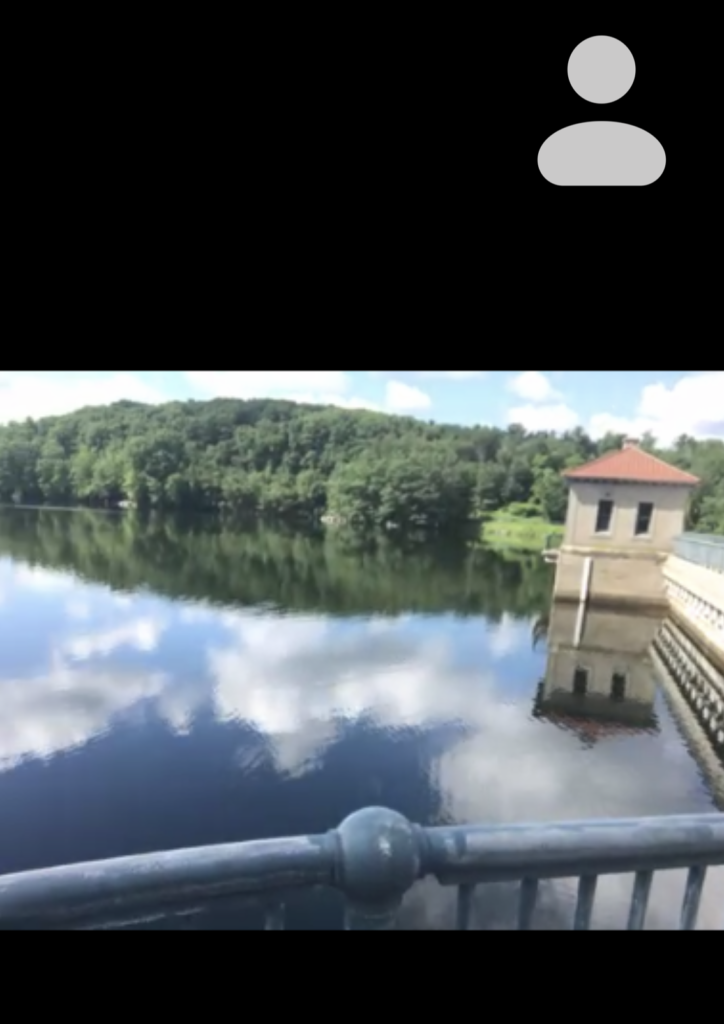 Watershed; a reservoir and a forest. We talked to students about Watershed history and their drinking water supply from the reservoir, and then lead an activity or experiment from the woods. Activities focused on the relationship between forests and water quality, and were tailored to suit the needs and abilities of each class. These included erosion demonstrations, watershed models, water quality testing and more. To balance out our time on Zoom, we utilized digital spaces where students could ask questions and leave comments about the virtual tours. For some students, the trips were a way to get outside when they were otherwise told to stay home. One 6th grader from Staten Island wrote, “My favorite part of the trip was getting to see the beautiful water, trees and river. I love the nice scenery when I am stuck inside.”
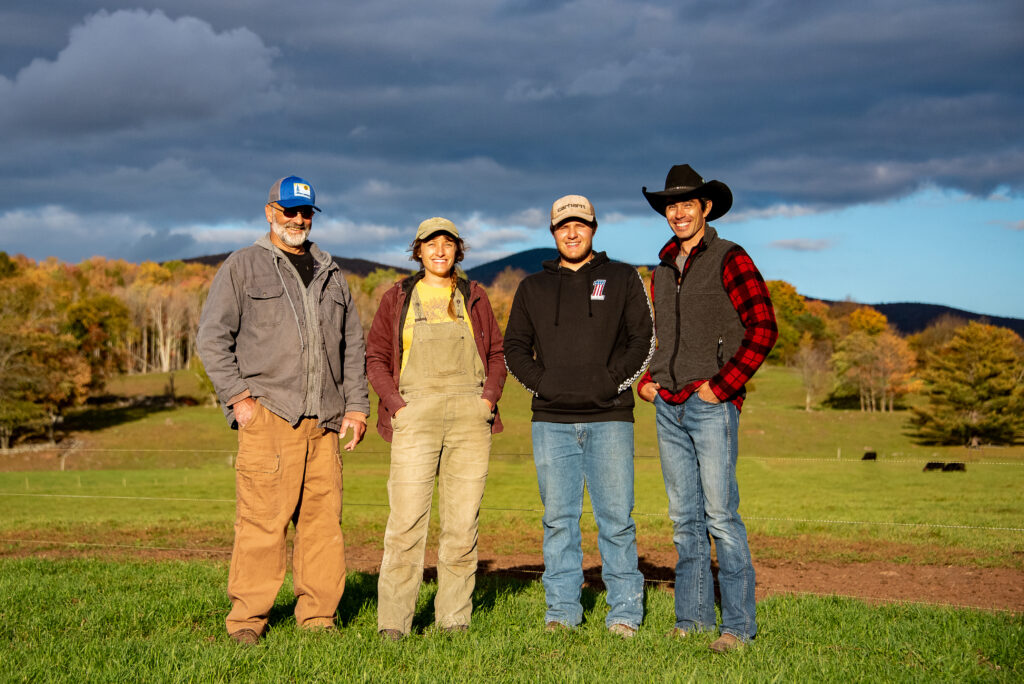 JJF Farm
 pasture-raised, grain-finished, hormone and antibiotic free. They have also added pork and chicken to their operation. Visitors can see the chickens out in the chicken tractor all summer long, grazing on grass and bugs. All of the meats are cryovac and frozen.

 PRESERVING A LEGACY—THE TRUESDELL FARM
 The Watershed Investigation and Repair Crew (WIRC) was designed, approved and implemented in the late fall of 2017 to perform real time responses to urgent assistance requests from Watershed Agricultural Program (WAP) participants addressing potential water quality threats within the West of Hudson Watershed region.
 Webcrest Farm is a 275-acre dairy farm located at the headwaters of the Little Delaware River in the town of Bovina, and has been a part of the Watershed Agricultural Program since 1996. The farm is owned and operated by Ed and Donna Weber, along with their son and daughter-in-law Cody and Carrie Weber. The dairy herd consists of 50 milk cows and 46 replacement youngstock. The Weber’s manage an intensive rotational grazing pasture system and grow all of their own forage consisting of alfalfa/grass hay and haylage, as well as corn silage. Webcrest Farm is enrolled in the Precision Feed Management Program and the Nutrient Management Credit Program. The farm property also has a WAC Conservation Easement.
 in the cow’s rumen, it cools the animal down, in comparison to grass silage, which heats the animal up when digested. This makes corn silage a very beneficial feed in the warmer months.The starch in corn silage also allows the protein in grass to be utilized more efficiently. After establishing growing enough corn to feed year-round as a goal, the Webers worked with their planner to make it happen. This year they planted a few more acres of corn, had a great growing year, had equipment readily available to them, and now have plenty of corn silage to feed over the next year. We look forward to seeing how this positively effects protein efficiency and milk production in the next grazing season.