Conservation Easements: Farm Transitions – A Cause for Celebration
2022 was a time of transition for the Easement Program with the addition of new staff, some familiar faces accepting new roles, and the Easement Committee welcoming new members. Our program has seen an unprecedented amount of second and third generation landowners establishing themselves as new stewards of the land this year. Staff are motivated by the successes of our new landowners, as eased lands staying in production is a critical component of the Watershed Agricultural Council’s (WAC) mission to keep agriculture and forestry economically viable in the NYC Watershed. This year we wish to highlight two young farm families—both share the commonality of purchasing former dairy operations protected by WAC conservation easements, and are continuing the farming legacy.
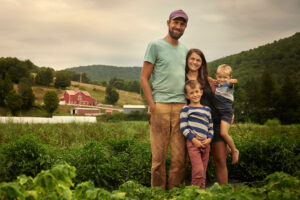 With greenhouses and other season extension strategies, Berry Brook Farm in Hamden, NY, produces organic vegetables, utilizing about 20 acres of land year-round. The farm is operated by Eleanor Blakeslee-Drain and Patrick Hennebery, who first moved to the area in 2011. By 2019, they purchased their forever farm down the road from their first location, “in large part because [it] had an Agricultural Conservation Easement with the WAC, making the farm more affordable and less desirable to non-farmers who would want to develop the property.” Transitioning the farm involved quite a bit of sweat equity including soil amendments, additional greenhouses, and converting the dairy barn into a wash/ pack and produce storage space. Patrick and Eleanor “are honored to steward their beautiful farm, to keep it in agricultural production, and to provide a sustainable livelihood in agriculture for all who work at Berry Brook Farm.”
Nearby in Delhi, NY, is Platner Brook Farm, a family-owned sheep operation. Dominick and Dorothy Frabizio purchased the farm in May 2021. They employ rotational grazing techniques with their sheep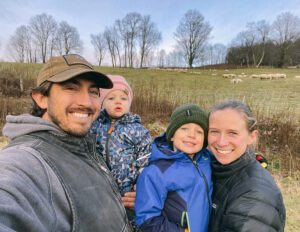 and lamb, and recently added Belted Galloways to the mix with a primary goal of selling direct-to-consumer. In their own words, “We are honored and feel very privileged to be here working at keeping this a thriving farm. Land conservation is important to our family because once it’s gone, it’s hard to get back. Our goal here is to operate in such a manner that is beneficial for our animals, the wildlife and creates/maintains a diverse ecosystem.”
Although periods of transition may have their moments of hardship, they create space for reflection, excitement and opportunity. Program staff remain encouraged by new landowners who are proud easement stewards, and as the year inches toward a close, we are eagerly re-engaging new easement acquisitions. We encourage any potentially eligible landowner interested in protecting the future of farming to give us a call. Read more of the 2022 Annual Report here.
Program Stats:
- 32,419 Conserved Acres
- 210 Eased Properties
- 45 Activity Requests

 approaching their needs proactively. By providing funding for business plans we hope to better position our farmers and foresters for improved economic profitability and sustainability. Similar to that, our micro grants encourage the implementation of activities that can enhance the economic viability of farm and forest businesses in the NYC Watershed.
 For more information visit:

 Agriculture in the East of Hudson (EOH) Watershed is under pressure from rising land values, urban expansion, development, increased regulation, and the loss of essential agricultural infrastructure. The Watershed Agricultural Council’s (WAC) EOH Program is the primary source of support for farms, playing a critical role providing technical assistance, implementing Best Management Practices (BMPs) and creating a network to support agricultural operations in Dutchess, Putnam, Westchester and Fairfield Counties. In the past year, the WAC welcomed three new farms into the EOH Program; Castle Hill Farm, Salinger’s Orchard and Bluestone Stables.
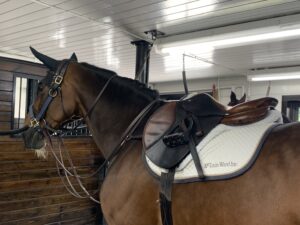 Castle Hill Farm is a 43 acre equestrian training facility located in the town of Southeast, NY and is owned and operated by five-time Olympian, McLain Ward. In response to a request from NYC Department of Environmental Protection, the EOH Program provided technical assistance to address a resource concern and worked with the farm to develop a Whole Farm Plan (WFP) to upgrade the farm’s existing nutrient storage and management plan.
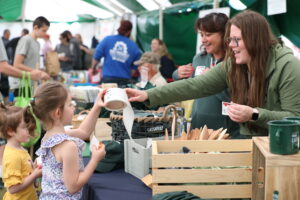 Events and tours were back in full swing in 2022. The Communications Department and Economic Viability Program attended and participated in various events across the NYC Watershed. The Meredith Dairy Fest was back for the first time since 2019, and had a great turnout. The team also participated in the Delaware County Fair, Family Farm Day, Andes Community Day, Bovina Farm Day, Taste of the Catskills, Delaware County Clean Sweep and more. In addition to these events, the Forestry Program attended Boonville Woodsmans Days and the Deposit Lumberjack Festival.
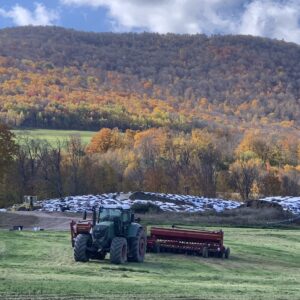 The Cornell Cooperative Extension Dairy Tour was held on three local farms this year, including two Ag Program participants Mushkoday Farm and Sher-Brook Farm. We hosted new leaders from the NYC Department of Environmental Protection on farm and forest tours to showcase how our programs work. Our Ag Program Tour was held on Albano Farms and highlighted several Best Management Practices as well as their new calf housing facility. The East of Hudson Program tour visited five participating farms that included some of the top equestrian facilities on the East Coast. The WAC also hosted Bard College students at Byebrook Farm, as we continue our partnership with their Environmental Policy Master’s Program.