Celebrating 25 years: The Pilot Farms

Author: Heather Magnan

Celebrating 25 years: The Pilot Farms

The Pilot Farms: Where it All Began

Developing a successful partnership requires a common understanding.In the case of the Watershed Agricultural Program, this understanding began in September of 1990 when New York City issued a discussion draft of proposed revised watershed regulations. Concerned that the proposed regulations would force the region’s farming industry out of business, dairy and livestock farmers solicited help from various local, state and federal agencies. This led to the formation of an Ad Hoc Task Force on Agriculture and New York City Watershed Regulations.

The Ad Hoc Task Force met for a year to explore non-regulatory alternatives for protecting New York City’s water supply while sustaining the economic viability of farming, which is the preferred land use. In December 1991, watershed farmers and NYC agreed to develop a city-funded program that would be based on voluntary participation, local leadership and the best scientific understanding of pollution prevention.

Phase I tested and demonstrated Whole Farm Planning on 10 pilot farms, using specialized best management practices (BMPs) based on scientific research. NYC invested $4 million through its Department of Environmental Protection (DEP) to support Phase I from September 1992 through September 1994. This Whole Farm Planning process, developed jointly based on Cornell University research and local field experience, was tested on these 10 pilot farms based geographically throughout the entire West of the Hudson watershed on a diverse selected set of agricultural enterprises.

Phase II began in October 1994, when NYC committed an additional $35.2 million to expand Whole Farm Planning beyond the 10 pilot farms to include at least 85% of the 440 large farms in the watershed at that time.

Since the initial work was done on the pilot farms, the program has grown tremendously. Today, nine of the farms are still involved in an agricultural business of some kind. Some have expanded their operations to producing value added-dairy, some have transitioned to beef, others largely focus on hay and crop production, and some are still traditional dairies 27 years later. The commitment to conservation that these farms, and countless others, have demonstrated over the years is truly impressive.

We want to thank our pilot farms as we celebrate 25 years, without them we wouldn’t be where we are today!

THE PILOT FARMS INCLUDE:
Crystal Falls Farms (George & Barbara Dean)
JJ Farber Farm (John & Jack Verhoeven)
Byebrook Farm (Paul & Gwen Deysenroth)
Deerfields Farm (Jim & Barb Robertson)
Green Heart Dairy (George & Gail Hillriegel)
Proud Meadow Farm (William Proudman)
Suz-Way Farms (Wayland & Suzanne Gladstone)
 River Haven Farm (Tom Hutson)
The Menke Farm (Paul & Candice Menke)
Sydetta Farm (Scott & Bruce Rasmussen)

Read more of the 2018 Annual Report here. 

[ngg src=”galleries” ids=”30″ display=”basic_thumbnail”]

Success Story: Riverdale Farm

For eight generations, the Frisbee family have been running their family-farm operation, Riverdale Farm, in Delhi, NY. In fact, their family were some of the first settlers in the area. The Frisbee’s have been active participants in our programs for almost 20 years. Read more here.

[youtube]https://www.youtube.com/watch?v=MhbOiuqNHzo[/youtube]

Get the 2018 Pure Catskills Holiday Gift Guide!

Shopping local just got easier with the 2018 Pure Catskills Holiday Gift Guide!

We’ve gathered honey collectors; wool and fiber makers; outlets for wreath and holiday decorations; cut-your-own tree farms; alcohol makers; handcrafted and hand-blended gift ideas; holiday caterers; preserved and canned goods; botanical/soap lines; holiday bakers; value-added dairy producers; maple syrup makers; local stores; places to stay and local happenings… all in ONE easy-to-access resource.

Support your local farm and forest producer and community by making your purchases count for clean water and the environment this holiday season! #ShopLocalCatskills

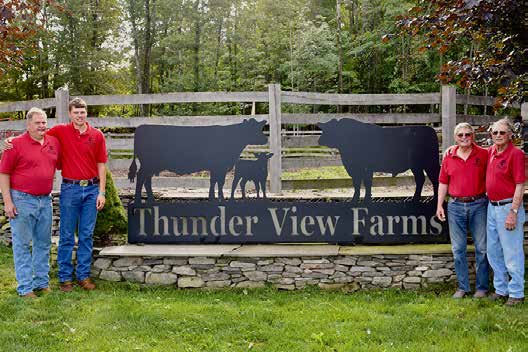
Success Story: Thunder View Farm

Check out our latest Success Story on Thunder View Farm!

On August 2nd it was announced that Thunder View Farms of Grahamsville, NY had won the Region I National Cattleman’s Beef Association (NCBA) Environmental Stewardship Award and is now one of six finalists for the national award in early February 2019 in New Orleans.

Read More Here.

Micro Grants Program Launched

The Watershed Agricultural Council’s Economic Viability Program is happy to announce our new Economic Viability Micro Grants Program!

Purpose: Encourage the implementation of activities that can enhance the economic viability of farm and forest businesses.
 
Eligibility: Any farmer, logger, forester, forest landowner or Pure Catskills member with property inside the New York City Watershed, preference will be given to WAC participants.
 
Request for Application (RFA): Applications will be due September 30, 2018 for the first round. Awards will be made two weeks after the deadline. Click here to download the application. 
 

NFU Advisor from SE England tours NYC Watershed Farms

During the month of July, the Watershed Agricultural Council (WAC) welcomed Tom Ormesher of South East England who is the National Farmer’s Union (NFU) South East’s Environment and Land Use Adviser. Ormesher spent two days touring the NYC Watershed region, our farms and NYC’s reservoirs learning how the WAC works with farmers on a voluntary basis to protect water quality.

“My role at the NFU involves working with farmers and growers to help them respond to environmental risks and navigate the complexities of environmental and planning regulation, so this project is entirely focused on how I can deliver better value for NFU members in the future,” said Ormesher. ­­

The NYC Watershed was Ormesher’s last stop has he had finished his Nuffield Scholarship Tour. Bringing together representatives of several countries to visit farms on four continents, examining how each manages the connection between farms and environmental protection and explore market-based, commercial approaches to managing the water environment. He decided to add the NYC Watershed due to his own interest in our agriculture and water quality programs. As he explained, “This Watershed protection effort is internationally famous and I wanted to see it for myself.”

WAC Council Chair Sally Fairbairn hosted Ormesher. Over his two day visit, he toured four local farms with the guidance of Brian LaTourette, longtime WAC farm planner. Farmer’s discussed the best management practices on their farms, incentivized nutrient management programs, federal stream protection programs, diversification and even an innovative use for drones to track corn plant population in an experiment comparing the successes of regular corn seed compared to bird repellent-treated seed.

As Ormesher reflected on his trip he noted that he was impressed by how well WAC staff worked with farmers and the trust level evident between the two, as well as how serious WAC participating farmers are about water protection. There are always doubts about whether a voluntary water protection program can work, butu7 the NYC Watershed model shows that it can.