February 2020 ENews
February 2020 News from the Watershed Agricultural Council can be read here.
February 2020 News from the Watershed Agricultural Council can be read here.

Read the January 2020 ENews here.

IT’S TIME TO JOIN PURE CATSKILLS TO GET IN THE GUIDE!
Our membership deadline is Monday, March 2 to be listed in the 2020-2021 Guide to Pure Catskills Products. Become a Pure Catskills member this year for just $35!
Membership includes:
-Printed Guide Listing with contact information and a 50 word description
-A detailed online listing on Pure Catskills searchable web directory, and a dedicated webpage to promote your business and products
-Use of Pure Catskills logo and other marketing materials to enhance your marketing efforts
-Promotional support for your products through events, media mentions, advertising, social media, and other targeted campaigns including the holiday gift guide and more
-Vending space under Pure Catskills sponsored tents at many local events
-And much, much more!
For membership information visit us online at www.purecatskills.com, or contact the Pure Catskills Team at (607) 865-7090.

Check out the December news from the Watershed Agricultural Council here!

This year on April 1st, the West of Hudson Watershed Agricultural Program (WAP) entered into a new six year contract with the New York City Department of Environmental Protection (NYC DEP) totaling over $4 million in annual funding, a significant increase from previous contracts. The new contract funding will help to accelerate the implementation of the WAP Best Management Practices (BMP) backlog list, and continue the new Watershed Investigation and Repair Crew (WIRC.)
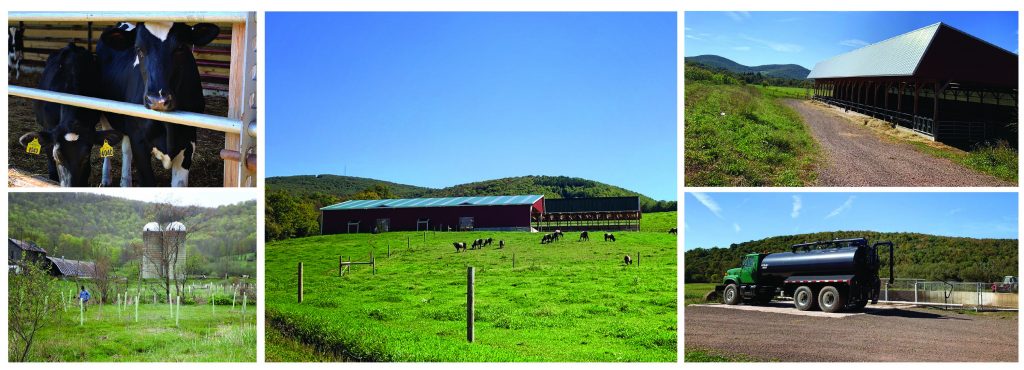
Due to the increased funding for implementation Gladstone Farms and Holley-Hill Farm both had covered feeding areas constructed this year. Gladstone Farms in Andes, NY had two areas built for various animal ages/sizes of their Belted Galway Beef herd. Holley-Hill Farm had a facility built for young livestock/heifers replacing a failing feeding area next to Kerrs Creek in Walton, NY. Both projects will have a positive impact on water quality by reducing animal run-off in sensitive areas.
Along with the NYC DEP funding, the WAP secured a grant of $1.2 million through the USDA Regional Conservation Partnership Program (RCPP) for implementation of three manure management conservation practices. A recipient of this grant was Posthaven Farm in South Kortright, NY. The Posts have been active participants in our programs since 1997. The farm has a dairy herd with award winning stock and a small beef herd. Thanks to the RCPP funding, this farm was able to benefit from implementation of a covered barnyard and a manure storage this year. These projects were completed simultaneously with a cost-share from NRCS.
Also in 2019, the WAP expanded the aerial cover crops initiative that seeded into 713 acres of standing corn last year and seeded over 1,200 acres this year. The pilot liming project which targets farms in the Precision Feed Management Program (PFM) is working with a second set of 15 farms. The lime that is spread on these farm fields will enable producers to increase the amount of home grown forages and decrease phosphorus coming onto these farms by decreasing the amount of purchased feeds. Finally as we close out the year, both the Conservation Reserve Enhancement Program (CREP) and the Catskill Streams Buffer Initiative (CSBI) Pilot Program implemented riparian buffers on four properties for a total of 20 acres. We are proud to report that in 2019 the WAP has completed 199 BMPs on participant farms.
The partnership between the WAP, Delaware County Soil and Water Conservation District, Natural Resource Conservation Service, Farm Service Agency and NYC DEP is unique because it combines the resources of multiple partners to both defray the costs over several agencies and to expand our ability to provide benefits that none of the partner agencies would have been able to provide individually.
Read the 2019 Annual Report here.

At the core of the Watershed Agricultural Council’s (WAC) mission is the balance of water quality with economic viability. True to this, the WAC’s Economic Viability (EV) Program works to enhance the profitability and sustainability of all agricultural and forestry enterprises in the NYC Watershed and Greater Catskill Region through initiatives including our Pure Catskills buy local campaign, our Micro Grants Reimbursement Program, and the newly launched in 2019 Business Planning Reimbursement Program.
This year, we want to take the opportunity to highlight the success of the first year of offering our Micro Grants Reimbursement Program. The purpose of these grants are simple: to encourage the implementation of activities that can enhance the economic viability of farm and forest businesses. Any farmer, logger, forester, forest landowner or Pure Catskills member with business property inside the West of Hudson NYC Watershed are eligible. We had four grant rounds in January, April, July and October. Over 25 applications were submitted, 22 were approved, and the total funds awarded were $81,917 (as of September 30, 2019), to date $41,357 has been reimbursed. 2019 Grant categories include:
Training: to encourage continuing education intended to enhance the economic viability profitability and sustainability of eligible applicant’s businesses by providing grant funding to help applicants offset the cost of online courses, workshops, seminars, conferences and college courses.
Marketing: to encourage branding, advertising and communications related to the marketing of products and services provided by eligible applicants.
Event/Mileage: to enhance the economic viability of farm and forest businesses by off-setting the cost of attending new events, fairs, farmers’ markets and/or transporting products to new markets or venues through mileage reimbursement and/or vendor fees reimbursement.
Staffing: to enhance profitability, productivity and/or assist with business expansion.
Loggers Workers Compensation: to enhance the economic viability of New York City Watershed Logging businesses by off-setting the cost of Workers Compensation Insurance by encouraging the use of the Planning Analysis in Timber Harvesting (PATH) software to assess logging costs and revenue.
The EV Program continues to play a unique role not only within the WAC organization, but the region. We have the ability to adapt with changing farm and forest trends and needs. The WAC is not only a resource for water quality protection, but we are now a resource for increased education, marketing, new markets, business expansion and more. These efforts will remain the focus of the EV Program as we look to evolve with future needs, and work to strengthen and foster economic growth for years to come!
Read the 2019 Annual Report here. 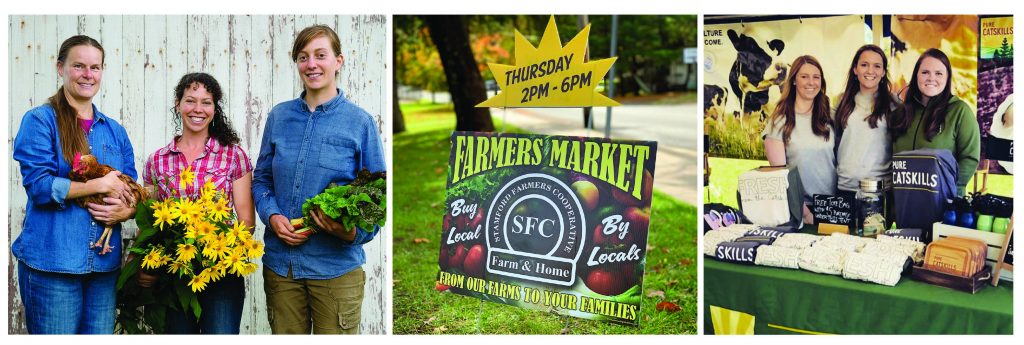

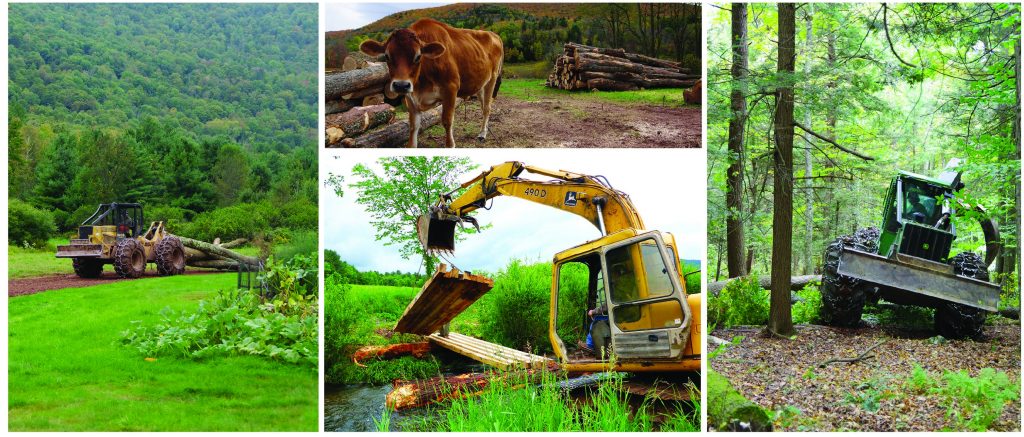
The Watershed Agricultural Council (WAC) Forestry Program uses technical assistance and cost-sharing to help Watershed loggers install water quality protection measures called Best Management Practices (BMPs) on timber harvests in the NYC Watershed. There’s plentiful research documenting the effectiveness of forestry BMPs in protecting water quality across the eastern US. But how effective are the WAC’s efforts to help loggers use BMPs? In 2019, researchers from the SUNY College of Environmental Science and Forestry (ESF) took up the challenge of evaluating the effectiveness of the WAC’s Forestry BMP Program.
This research by SUNY ESF sought to evaluate the WAC’s Forestry BMP Program by comparing harvests that did participate (WAC) with harvests that did not (NonWAC). The WAC and NonWAC harvests were compared by assessing the implementation rates of different BMPs. Comparing the WAC to NonWAC groups gives us a direct look at how involvement with WAC impacts the rate of forestry BMP implementation. A total of 45 Watershed harvests were visited as part of the study, 23 WAC and 22 NonWAC.
The researchers found significantly better BMP implementation on the WAC versus NonWAC harvests when it came to protecting water quality on skid trails and stream crossings. In fact, the scoring of water diversion devices on the WAC harvests doubled that of the NonWAC harvests. This means loggers working with the WAC used forestry BMPs more frequently to protect water quality than loggers who don’t participate.
The good news doesn’t stop with harvests evaluated for this 2019 study. The researchers were able to compare their 2019 data with the results of similar research conducted in 2002 and 2011 that evaluated the WAC’s Forestry BMP Program. They also found that all categories of BMP implementation demonstrated increasing scores over the past 18 years. These means that not only is the WAC’s Forestry BMP Program key in protecting water quality on harvests now. It’s getting better at protecting water quality over time!
Read the 2019 Annual Report here.

The Watershed Agricultural Council’s (WAC) Conservation Easement Program has much to celebrate and reflect as this decade ends and the year 2020 is near. Most noteworthy is this year’s achievement of 30,000 acres conserved “to protect the water quality of the New York City Watersheds, and to protect agricultural and forestry lands by limiting the form, location and density of development.” And while the quoted conservation purpose is certainly the main objective of all easement projects, the end goal is often times not the only outcome worthy of praise. The WAC staff fosters a relationship with landowners and through the conservation easement creates a legacy, respecting that property’s past while partnering as future stewards of the land.
On either side of Streeter Hill in Fleischmanns, NY,on the dead-end Moseman Road, are the fields of Three Oaks Farm. It is easy to appreciate the land’s history, utility and potential considering the property’s quintessential stone walls, historic farmhouse, and breath-taking panorama. One can envision the past (Jersey herds and milk cans loaded onto old pickups in the morning light) and ponder the farm’s resurgence (fields freshly cut, young-stock grazing, and a fresh blueberry patch) all within the same moment. On July 10, 2019, the WAC and the DiBenedetto family closed the conservation easement and forever secured those 161 acres for responsible agriculture.
Jim Moseman, whose parents purchased the farm in 1923 from the Streeter family, originally began the process. Unfortunately, he passed before seeing the project to fruition. To quote Jim’s niece, “Jim was truly a steward of his farm. He knew better than most the joys and vicissitudes of life on a small farm. His most ardent wish concerning his estate was that the land remain intact and undeveloped, preferably under agriculture. His family is happy to see Jim’s desire being fulfilled under the stewardship of their local friends and neighbors, the DiBenedettos.”
Program staff look forward to all future monitoring visits and the ability to watch this farm flourish. The WAC’s Deed of Conservation Easement is truly a “working lands” easement; not only intended to conserve but also to encourage and support farm operations. Additionally, the WAC’s ability to purchase development rights, allows for and in this case facilitated, the transition of farm from one family to the next. With the dairy industry in decline, it is humbling for the Easement Program to be a part of this particular success story.
Perhaps that is the often downplayed outcome of the WAC’s easement projects—the connection between people, healthy lands and waters, and the local economy. The project at Moseman Road hit all the marks: water quality protection, limitation of development, the preservation of a family farm; an all-around positive experience. A win for our community and those downstream.
“Jim was truly a steward of his farm. He knew better than most the joys and vicissitudes of life on a small farm. His most ardent wish concerning his estate was that the land remain intact and undeveloped, preferably under agriculture. His family is happy to see Jim’s desire being fulfilled under the stewardship of their local friends and neighbors, the DiBenedettos.”
Read the 2019 Annual Report here.
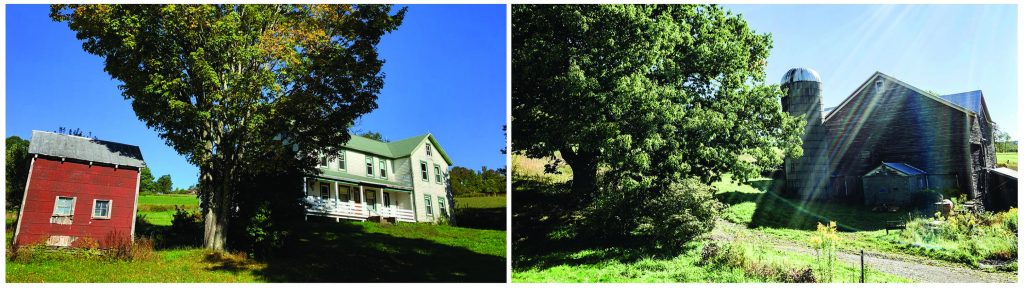

We understand that farming is dynamic and sometimes what worked in the past isn’t always what will work in the future for agricultural businesses. As some farms begin to transition into different operations, the WAC is here as a resource to help with that transition.
Many farms in the area are transitioning to the next generation: the Moodys, DiBenedettos, Hillreigels, Deysenroths, Hanselmans and Holdridges to name a few. Each of these farms are remaining in dairy production, but adding their own twist of diversification. They have all researched expanding their markets and have come up with solutions that will best fit their operation and capacity. Take a look at the Hanselman family, Barb has a thriving pie and catering business known at ‘The Farmers’ Wife,’ while Seth grows some of the best sweet corn and tomatoes around which can be found in stands all over the county. The Deysenroth family has expanded their Gouda cheese operation over the years and are now processing cheese in their new on-site facility. The Holdridge family has added a new farmstand featuring local products, Meghan Moody Potter and her husband Joe have added a beef herd, Donn Hillreigel has converted to organic, and the DiBenedetto’s have expanded their retail milk markets. All of these farms are working with the next generation to continue doing what they love.
Other farms in the region are experimenting with various forms of agritourism – farm tours, glamping and farm stays. There is an increased interest in the story of where consumers get their food, and the Schmid and Marsiglio families are tapping into that interest by offering interactive farm stays. Other farms have decided to try raising beef cows, and Delaware County is now boasts the second largest number of beef animals in the state!
As some traditional dairies transition to the next generation, others retire and a new form of farming emerges on the land. An increase of high-quality vegetable operations have emerged. Tianna Kennedy, Eleanor Blakselee and Richard Giles are all working in the region offering a mix of CSA’s, retail, restaurant and regional hub production. Eleanor and her husband Patrick recently purchased a retired dairy farm that has a WAC Conservation Easement on it. They are working hard to till the fields and transition them from crop production to organic vegetables.
The WAC is not only supporting farm transition, but forest ownership land transi-tion as well. Transitioning the land to the next generation of dedicated forest owners is just as important to maintain a stable Catskill forest. Avoiding parcelization while responsibly utilizing a woodlot’s resources has been a goal of WAC’s Forestry Program since inception.
Transition is often looked at as something that is hard to do. There is change and uncertainty as we try something new or different than what we are accustomed to. While change can be risky, it is inevitable, and it can also be the way to save the farm and continue a way of life. Whatever kind of transition you might be considering, the WAC may be able to help. For watershed farms and forest lands our Easement Program staff can help you consider whether a WAC Easement would be an aid in a farm or forest land transition. Our Economic Viability Program has a micro-grant program that can help fund transition fundamentals from business plans, training, website development and other marketing tools. Contact us to find out how we can assist in your transition plans. We want to see this land and its people continue to prosper for many years to come!—Sally Fairbairn, Council Chair
Read the 2019 Annual Report here.
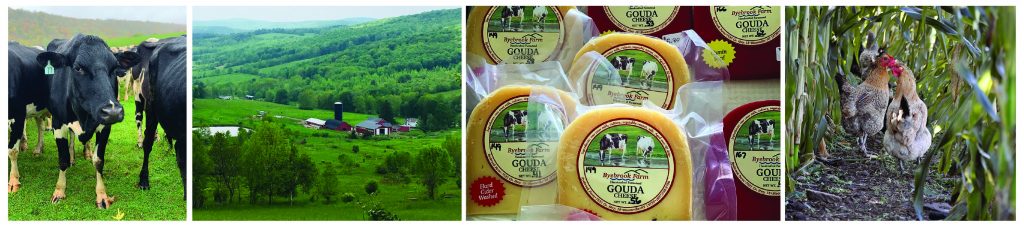

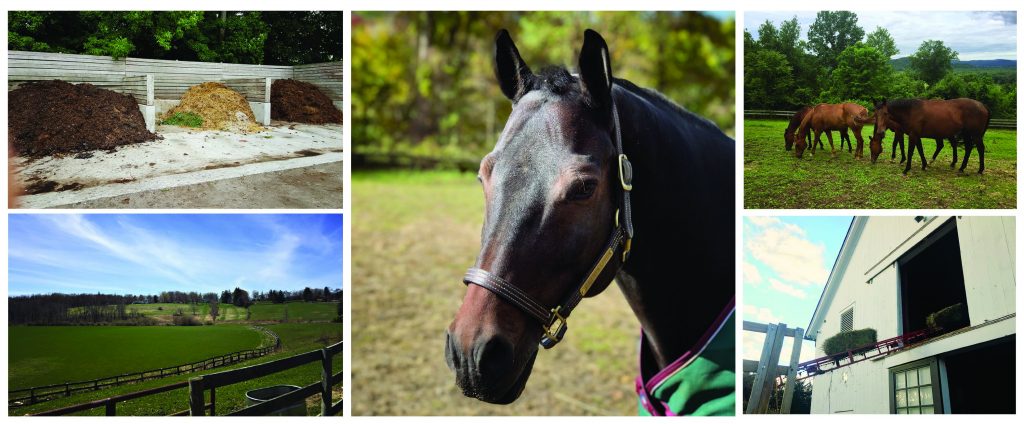
The East of Hudson (EOH) Watershed spans Dutchess, Putnam, Westchester and Fairfield Counties, the most densely populated areas of the New York City Watershed. Agriculture in these counties are under pressure from changes in land uses, development, urban expansion, rising land values and loss of agricultural infrastructure. In this challenging environment, the Watershed Agricultural Council (WAC) plays a critical role in providing technical assistance, implementing Best Management Practices (BMPs) and creating a support network for farms.
Haviland Hollow Farm is located on 225 acres in Patterson, NY in the heart of the Great Swamp. This historic Putnam County farm has indoor and outdoor riding arenas, stables, boarding facilities, two polo fields, riding trails and is home to 120 horses.
Haviland Hollow became a member of the EOH Agricultural Program in 2010 and has implemented 13 BMPs to protect the East Branch Croton River and the important wetlands surrounding the farm. The EOH Program has implemented two manure pads and heavy use areas to protect local waterways and allow for animal waste to be exported from the farm. The WAC has also created additional pad-docks to improve grazing practices, a solar watering facility, a stream crossing, riparian herbaceous cover, as well as a nutrient management plan and a grazing plan to improve pasture rotation. This year EOH implemented an access road and additional structures for water control to ensure the farm has year-round access to all their pastures.
In addition to the farm’s environmental conservation stewardship and their role as a leader in the EOH in equestrian community, Haviland Hollow hosts philanthropic events in support of other NYC Watershed farms. This year marks the 10th Annual Haviland Hollow Charity Cup benefiting Pegasus Therapeutic Riding, an EOH Agricultural Program participant which provides equine-assisted activities and therapies to people with special needs, veterans and at-risk individuals.
The East of Hudson Agricultural Program continues to evolve to provide crucial support for our farm partners protect drinking water quality, preserve working farms in the Watershed and foster a strong stewardship ethic.
Read the 2019 Annual Report here.