“I am proud to report that 2023 proved a banner year for the Watershed Agricultural Council (WAC) as full programming not only resumed but surpassed prior budget and implementation marks. Infallible efforts within our core Agriculture, Easements, Economic Viability and Forestry programming, (as well as administrative services oversight), helped pave the way for a host of new initiatives including more robust and longer-term agreements with NYC DEP, future building considerations, and a burgeoning analysis of the impact climate change plays in our region. Moving forward, the WAC reaffirms its commitment to those we serve and is devoted to finding greater efficiency and effectiveness in everything we do. On behalf of the WAC and in recognition of our 30th anniversary, I would like to thank the staff, Board, partners and most importantly our participants for their unwavering support.”
—Ryan Naatz, Executive Director
The Agricultural Program made great strides this year in protecting water quality and supporting the economic viability of farms. The Watershed Agricultural Council (WAC) welcomed its new Agricultural Program Manager, Connor Young, who attributes these achievements to strong partnerships and the dedication of participating farms. The return to full implementation levels has resulted in positive momentum which the program aims to continue in 2024.
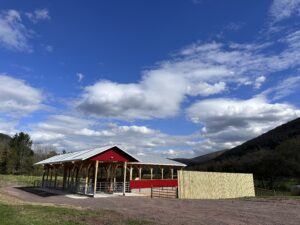
Structural BMP Implementation:
The program implemented 85 projects, totaling 123 Best Management Practices (BMPs). These encompassed a wide range of practices including barnyards, waste storages, fences, access roads, water facilities and more. The Whole Farm Planning and Engineering teams worked closely with farmers and contractors to keep projects moving despite record rainfall. The program is anticipating increasingly variable conditions and working with partners to better understand how this might impact BMP functionality and the positive impact they have on water quality and farm operations under those scenarios.
Agronomic Practices:
The success of the program also relies on sound management strategies, and many farms have successfully adopted agronomic practices with notable results:
• Nutrient Management (NM): It was a year of technical transition for the NM Team as they adopted the NY Phosphorus Index 2.0 and CropWareNet, the newest software platform for commercial planning used by the program and statewide partners. This conversion will be fully implemented in 2024 ensuring that all 199 plans remain active and useful to producers. The NM Credit program continues to thrive with 134 record submissions for the 2022-2023 spreading season.
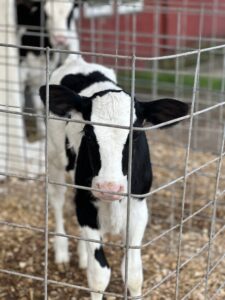
• Precision Feed (PF) Management: Enrollment in the PF Program grew this year with 36 dairy and 18 beef operations currently participating. Ongoing benchmarking and Quality Management Assistance continues to show the benefits of optimizing animal health and resource efficiency through data-driven management support.
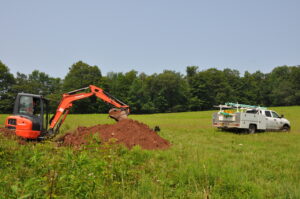
• Cover Crop Adoption and Rate Increase: The program completed a comprehensive analysis of the actual costs of managing cover crops. The results indicated an average cost of $140 per acre for the 2022 growing season. The program adopted this as its new cap and will adjust annually to account for variable costs, labor and equipment costs. The current projection for 2023 is 2,319 aces on 31 farms barring any impacts from corn harvest delays (up from 18 farms and 1,315 acres in 2022). The benefits of this practice are profound in reducing erosion, preventing nutrient leaching and bolstering soil health. Watershed Investigation and Repair Crew (WIRC): WIRC has been instrumental in promptly addressing BMP issues that directly impact water quality and farm operations. Over the past year, 45 BMP investigations, 17 emergency and priority repairs, and six projects from the annual workload were completed. The team also provides technical assistance
whenever possible, supporting 30 additional projects in direct collaboration with producers. Looking Forward:
The Agricultural Program remains committed to ongoing evaluation and innovation. We are actively assessing the long-term impact of our metrics and exploring new approaches to further enhance program impact while adapting to evolving agricultural needs and environmental challenges. Our commitment to advancing evidence-based practices and innovation ensures the long-term effectiveness of our efforts in addressing resource concerns and supporting the agricultural community within the NYC Watershed.
The Watershed Agricultural Council (WAC) participated in over 80 education/outreach events and tours in the NYC Watershed and beyond in 2023. Highlights include hosting NYC educator field trips and bus tours, tours of the
Watershed, and farmer education events. Staff also attended farmers’ markets, the Meredith Dairy Festival, Delaware County Fair, Lumberjack Festival, and the Cauliflower Festival to name a few. WAC staff from all programs represented our initiatives, mission, vision, and values throughout the region this year.
Find us in 2024 by visiting nycwatershed.org to see upcoming events.
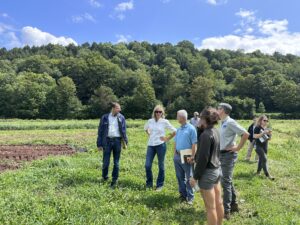
The Watershed Agricultural Council’s (WAC) Economic Viability (EV) Program is proud to highlight the development and launch of our new Fruit and Vegetable Expansion Pilot Grant encouraging the implementation of activities that support farmers in the NYC Watershed who are seeking to expand agricultural production of fruits and vegetables.
In April 2023, the NYC’s Mayor’s Office released the City’s Climate Action Plan titled PlaNYC: Getting Sustainability Done. The three main objectives are to protect from climate threats, improve quality of life, and begin to build the green economic engine. Within the pages of the plan it states, ‘create an incentive program to support farmers in the NYC Watershed who expand agricultural production of fruits and vegetables.’ In partnership with and through funding made available by the NYC Department of Environmental Protection (DEP), the WAC developed this new grant opportunity in direct response. Categories include:
1. Greenhouse and/or Raised Bed Expansion Reimbursement which will support activities related to expanding and/or starting fruit and vegetable production to increase producer viability. Eligible activities include row cover support, winter season extension projects, small tunnel projects and operational expansion related items;
2. Water Access Reimbursement which will support agricultural projects and purchases related to water management that
aim to help agricultural producers expand and/or initiate fruit and vegetable production. Eligible activities include wash station support, irrigation needs and projects that relate to heavy storm events, overall rainfall and periods of drought; and
3. Farm Structure Reimbursement which will support structural needs as related to the development of vegetable and fruit expansion of business operation. Eligible activities include insect and bird netting, deer fencing, cold storage, tables, bulk bins and crates necessary for transport and pest control.
One of the benefits of the EV Program is its ability to explore innovative methods for enhancing economic viability in the NYC Watershed. For more information about the Economic Viability Micro Grants Reimbursement Program, Business Planning Reimbursement Program or the Farms and Forest in Transition Reimbursement Program visit nycwatershed.org/economicviability.
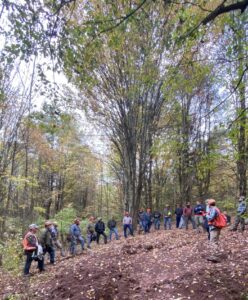
The Watershed Agricultural Council’s (WAC) Forestry Program works in partnership with Cornell Cooperative Extension (CCE) Columbia/Greene County and New York Logger Training, Inc., to host the three core courses necessary for regional loggers to earn “Trained Logger Certification” (TLC). The three TLC core courses are—Game of Logging, First Aid/CPR and Silviculture & Ecology.
These three workshops comprise the core courses that loggers are required to attend to become Trained Logger Certified. The courses are offered in sequence, once in the spring and once in the fall, so new participants are ensured of a timely training event. Game of Logging is a series of workshops that provide training in all aspects of logging: chainsaw safety, felling techniques and machine operation. First Aid & CPR is taught by certified Red Cross instructors. Forest Ecology & Silviculture provides loggers basic information about sustainable forestry, forested ecosystems, and Best Management Practices (BMPs). Over the past year, 40 loggers participated in six TLC core courses, two Game of Logging, two First Aid & CPR and two Forest Ecology and Silvicultural workshops.
In addition to promoting the certification of new loggers the WAC Forestry Program also encourages continuing participation in Trained Logger Certification. At least two additional workshops are held each year to provide the continuing education credits loggers need to maintain their TLC. The continuing education workshops cover a range of topics like Log Truck Safety, Logger Rescue and Hazard Tree Removal. Over the past year, 36 loggers participated
in two TLC continuing education courses, one Stream Crossing workshop and one Invasive Forest Pest workshop.
The WAC Forestry Program also supports the TLC program by providing financial incentives. These incentives are offered in the form of higher costshare rates and preferential applicant approval for TLC loggers participating in the WAC’s Forestry BMP Program. Over the past year a total of 39 TLC incentive payments were issued to 23 loggers totaling more than $41,000.
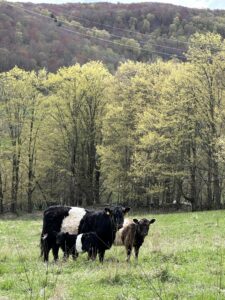
The Watershed Agricultural Council’s Easement Program (EP) spent 2023 engaging new conservation easement interest. After a three year pause of acquisitions and filling multiple vacant positions, the Easement Team is proud to share that it has now entered into contract on two properties aimed to close in 2024. Staff are actively land planning on 11 properties and have four additional applicant properties scheduled to be considered in December of this year. In June, the EP received nine new applications and of those, eight were approved to move to land planning. The pipeline of candidate conservation properties is filling up fast, and we’re thrilled to see so much interest after such a long pause.
WAC accepts new easement applications on a rolling basis, but generally only selects new applications to proceed into the easement land planning process twice per year. For more information or to apply visit: nycwatershed.org/conservation-easements/acquisitions.
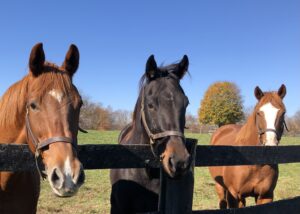
The East of Hudson (EOH) Agricultural Program’s efforts in 2023 exemplify the Watershed Agricultural Council’s (WAC) core tenets of protecting water quality, preserving working landscapes and providing critical support for watershed farms.
This year, the WAC implemented Best Management Practices (BMPs) to protect water quality on 25% of participating EOH farms. Implemented structural and management conservation practices include nutrient management plans, pasture plantings, dumpster pads for manure removal, protection of heavy use areas, access roads, structures for water control, agrichemical handling facilities.
Since 2020, the WAC has developed five new whole farm plans for EOH farms. The COVID pandemic as well as WAC’s reorganization and restructuring efforts delayed implementation for these new farm participants. This year EOH commenced implementation of BMPs on all five new EOH farms, prioritizing the highest impact BMPs to protect water quality and improve farm operations.
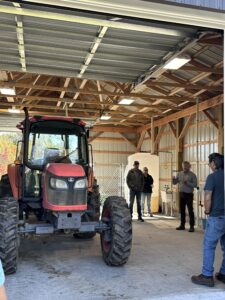
As the EOH program reaches its 26th year of working with watershed farms, many conservation practices are reaching their functional end of lifespan. The repair or replacement of existing best management practices has become a priority for the program. This year, EOH completed the of implementation projects at Zephyr Farm, Arcadia Farm and Big Elm Farm to ensure aging conservation practices will continue to protect water quality in the EOH Watershed.
Development pressure, high land values, suburban expansion, municipal regulation, and the lack of agricultural infrastructure present significant challenges to EOH farms. The WAC is the primary source of support for EOH farms and provides critical support, technical assistance, and agricultural education in the region.
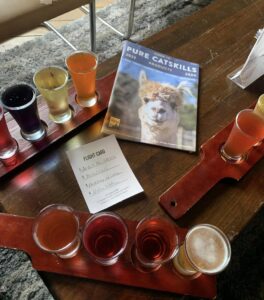
Check out the November News from the Watershed Agricultural Council. Our new Grant Program is offered to Fruit and Vegetable growers, apply here. Shop local this holiday season with the Pure Catskill Holiday Gift Guide. Learn about Conservation Easement opportunities, installing a water bar, Career Opportunities and more here.
OCTOBER 2, 2023, WALTON, NY– The Watershed Agricultural Council (WAC) is announcing a new pilot grant opportunity through its Economic Viability Program that will encourage the implementation of activities that support farmers in the NYC Watershed who are seeking to expand agricultural production of fruits and vegetables.
Greenhouse and/or Raised Bed Expansion Reimbursement which will support activities related to expanding and/or starting fruit and vegetable production to increase producer viability. Eligible activities include row cover support, winter season extension projects, small tunnel projects and operational expansion related items;
Water Access Reimbursement which will support agricultural projects and purchases related to water management that aim to help agricultural producers expand and/or initiate fruit and vegetable production. Eligible activities include wash station support, irrigation needs and projects that relate to heavy storm events, overall rainfall and periods of drought; and
Farm Structure Reimbursement which will support structural needs as related to the development of vegetable and fruit expansion of business operation. Eligible activities include insect and bird netting, deer fencing, cold storage, tables, bulk bins and crates necessary for transport and pest control.
Eligibility is for any NYC Watershed ‘farm operation’ as defined by Agriculture & Markets (AGM) CHAPTER 69, ARTICLE 25-AA, SECTION 301, Subdivision 11 meaning the land and on-farm buildings, equipment, manure processing and handling facilities, and practices which contribute to the production, preparation and marketing of crops, livestock and livestock products as a commercial enterprise, including a “commercial horse boarding operation” as defined in subdivision thirteen of this section, a “timber operation” as defined in subdivision fourteen of this section, “compost, mulch or other biomass crops” as defined in subdivision seventeen of this section and “commercial equine operation” as defined in subdivision eighteen of this section. Such farm operation may consist of one or more parcels of owned or rented land, which parcels may be contiguous or noncontiguous to each other. Preference will be given to WAC participants.
A request for applications will be issued via WAC social media and local publications on October 1, 2023. The total amount that can be applied for is $5,000. The application deadline for this round is November 30, 2023. Awards will be made within six months after the deadline. For application details and to apply visit: nycwatershed.org/economic-viability/fruit-and-vegetable-expansion-pilot-grant.
One of the benefits of the Economic Viability Program is its ability to explore innovative methods for enhancing economic viability in the NYC Watershed. For more information about the Economic Viability Micro Grants Program: Fruit and Vegetable Expansion Pilot Grant or other grants we offer please contact Kristan Morley, Economic Viability Program Manager, by phone at (607) 865-7090, via email at evprogram@nycwatershed.org, or visit nycwatershed.org/economic-viability


 Structural BMP Implementation:
 operations currently participating. Ongoing benchmarking and Quality Management Assistance continues to show the benefits of optimizing animal health and resource efficiency through data-driven management support.
 issues that directly impact water quality and farm operations. Over the past year, 45 BMP investigations, 17 emergency and priority repairs, and six projects from the annual workload were completed. The team also provides technical assistance

 AC) Economic Viability (EV) Program is proud to highlight the development and launch of our new Fruit and Vegetable Expansion Pilot Grant encouraging the implementation of activities that support farmers in the NYC Watershed who are seeking to expand agricultural production of fruits and vegetables.
 starting fruit and vegetable production to increase producer viability. Eligible activities include row cover support, winter season extension projects, small tunnel projects and operational expansion related items;
 The Watershed Agricultural Council’s (WAC) Forestry Program works in partnership with Cornell Cooperative Extension (CCE) Columbia/Greene County and New York Logger Training, Inc., to host the three core courses necessary for regional loggers to earn “Trained Logger Certification” (TLC). The three TLC core courses are—Game of Logging, First Aid/CPR and Silviculture & Ecology.
 The Watershed Agricultural Council’s Easement Program (EP) spent 2023 engaging new conservation easement interest. After a three year pause of acquisitions and filling multiple vacant positions, the Easement Team is proud to share that it has now entered into contract on two properties aimed to close in 2024. Staff are actively land planning on 11 properties and have four additional applicant properties scheduled to be considered in December of this year. In June, the EP received nine new applications and of those, eight were approved to move to land planning. The pipeline of candidate conservation properties is filling up fast, and we’re thrilled to see so much interest after such a long pause.
 This year, the WAC implemented Best Management Practices (BMPs) to protect water quality on 25% of participating EOH farms. Implemented structural and management conservation practices include nutrient management plans, pasture plantings, dumpster pads for manure removal, protection of heavy use areas, access roads, structures for water control, agrichemical handling facilities.
 As the EOH program reaches its 26th year of working with watershed farms, many conservation practices are reaching their functional end of lifespan. The repair or replacement of existing best management practices has become a priority for the program. This year, EOH completed the of implementation projects at Zephyr Farm, Arcadia Farm and Big Elm Farm to ensure aging conservation practices will continue to protect water quality in the EOH Watershed.
