Online Public Meeting Reminder

Online Public Meeting Reminder

Interested in clean, affordable NYC drinking water?

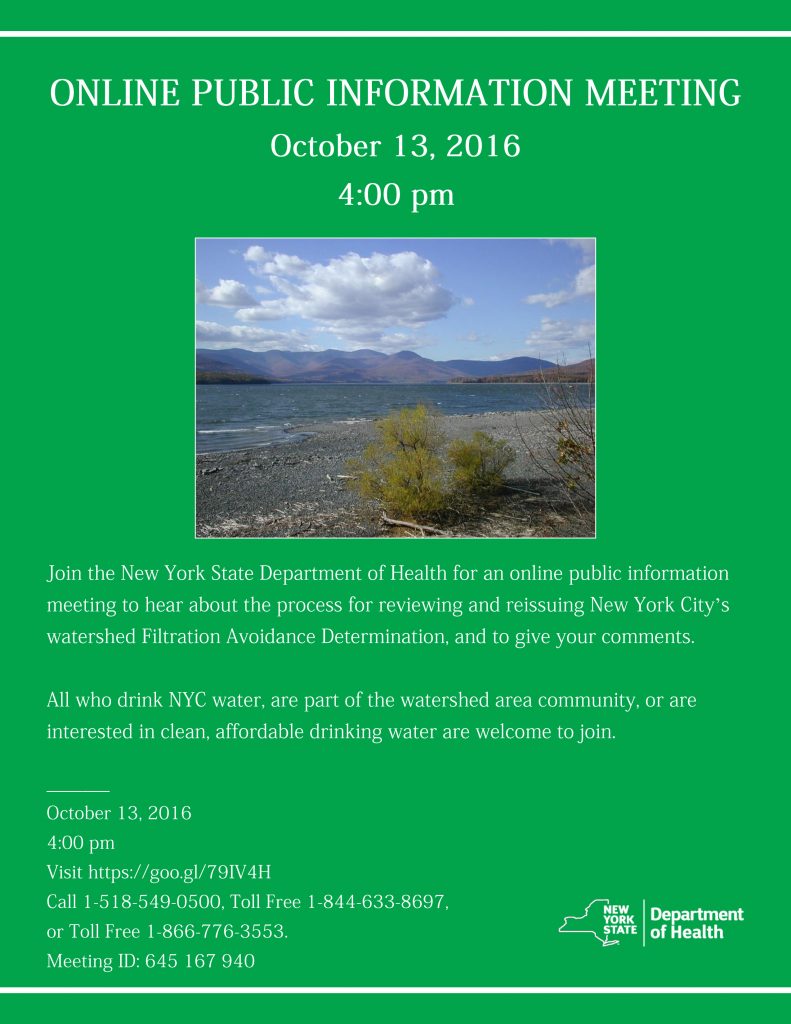
If so, the New York State Department of Health (NYSDOH) invites you to join an online public information meeting on October 13th to learn about the protection of New York City’s Watershed, and the programs in place that help to keep it clean.

Much of New York City’s water comes from the Catskill/Delaware drinking water system.  Unlike most water systems, the quality of that water is good enough that NYSDOH and USEPA have determined that it can remain unfiltered. This Filtration Avoidance Determination, or FAD, is periodically reviewed to ensure that the water still meets the standards.  The FAD is being reviewed to make sure it contains the right mix of programs to protect water quality.  NYSDOH is seeking public comment and participation to help inform the development of programs for the next FAD.

What does this mean for you? If you drink New York City’s water, are part of the watershed area community, or are simply interested in keeping drinking water clean and affordable, the online public information meeting on October 13th will explain the FAD process and will help you learn about how clean drinking water is maintained for New York City. Please join in and make your comments heard.

Webinar Information:
October 13, 2016
4:00 pm
Click https://goo.gl/79IV4H
Or call 1-518-549-0500, Toll Free 1-844-633-8697, or Toll Free 1-866-776-3553. Follow the prompts and enter Meeting ID 645 167 940.

fad-flyer-green

$43 Million awarded by NYC DEP to secure Conservation Easements in the NYC Watershed

WATERSHED AGRICULTURAL COUNCIL AND NYC DEP ANNOUNCE $43 MILLION STEWARDSHIP FUND FOR LONG-TERM PROTECTION OF FARM AND FOREST EASEMENTS

Fund will ensure protection of working landscapes and water quality for decades to come

[youtube]https://youtu.be/ZiaOTazOX7k[/youtube]

Walton, NY- The Watershed Agricultural Council (WAC) and the New York City Department of Environmental Protection (DEP) today announced the creation of a $43 million endowment fund for WAC that will be used to safeguard agriculture and forestry easements for decades to come. The endowment, which was funded by New York City, will be used by WAC to steward easement lands that are held by the council now and in the future. WAC currently holds easements across 25,845 acres of farm and forestland. These easements aim to conserve working lands while also protecting the Watersheds that surround New York City’s water supply reservoirs in the Catskills.

Money from the fund will be used to perform aerial and ground monitoring of the easements, and to safeguard their boundaries against encroachments. The stewardship fund will also be used to protect the water quality of the New York City Watersheds, and to oversee any farm, timber or other projects on these working landscapes to ensure all work is performed in a manner that is protecting water quality.

“The Council has had a significant impact on the environment and the regional economy for over 20 years,” said Craig Cashman, WAC Executive Director. “Each of our service areas – agriculture, forestry, conservation easements, and economic viability – are a blend of our mission with the intent to strike a balance between water quality and economic viability.”

“The preservation of agricultural land is a nationwide movement for all the obvious reasons,” said Fred Huneke, WAC Director and former Chairman, who has been with the organization since its inception and recognizes the importance of protecting working lands. “Our partnership with New York City serves the dual purpose of preserving water quality and the agricultural industry through a variety of programing including easements on agricultural lands. The addition of this stewardship funding secures WAC’s future as a land trust, protects water quality, and also maintains the working landscapes and economic viability of this place we call the Watershed.”

“Since it was formed by local farmers more than two decades ago, the Watershed Agricultural Council has improved infrastructure at hundreds of farms, preserved thousands of acres of working landscape in the Catskills, and its work has measurably improved water quality in New York City’s reservoirs,” DEP Acting Commissioner Vincent Sapienza said. “The key now is to preserve these improvements for many generations to come, which is why the City has created this stewardship fund within WAC. I want to thank the board of directors and all the staff members at WAC, and the farmers who’ve voluntarily implemented programs on their lands to help protect the water supply for 9.5 million New Yorkers.”

Richard Giles of Lucky Dog Farm in Hamden, NY, is a prime example of conservation easements improving a farm’s viability. “It makes it possible for this farm to remain a part of the working landscape beyond my time here. My children and my farm crew intend to continue the operation of our organic vegetable farm, and the stewardship endowment ensures that the land will be operated to conserve the soil and the clean drinking water into the future, and that unwise development of this piece of the earth will be prevented.”

“The Land Trust Alliance commends the partnership between the Watershed Agricultural Council and the New York City Department of Environmental Protection,” said Andrew Bowman, President of the Land Trust Alliance (LTA). “This funding announcement helps ensure that land protection efforts in the New York City Watershed stand the test of time. As a member of the LTA, WAC is setting the standard for easement stewardship and effective, permanent protection of working farms and forests, wildlife habitat and critical watershed lands that provide clean drinking water to more than 9.5 million New Yorkers every day. To protect substantial public and private investments in strategic land conservation, the Alliance encourages organizations like WAC to develop the stewardship capacity and financial resources to further safeguard such interests in perpetuity. We applaud this landmark investment and hope it serves as a model for municipalities and land trusts across the country as they collaborate to protect significant natural resources for generations to come.”

“New York is home to some of the most threatened farmland in America,” said David Haight, New York State Director for American Farmland Trust. “The equivalent of 5,000 farms have been paved over across the state since the 1980s. The partnership that the City of New York and the Watershed Agricultural Council have forged will protect farmland so that New Yorkers will enjoy clean drinking water, local food and a stronger economy for generations to come.”

According to Ryan Naatz, WAC’s Easement Program Director; since its inception in 2001,WAC’s Agricultural Conservation Easement Program has protected 22% (25,845 acres) of the 288 currently eligible farms in the Catskill/Delaware basins of the New York City Watershed. This accomplishment marks one of the largest private land protection efforts in New York State. Conservation easements protect land for future generations by restricting or conditioning certain rights or uses necessary to protect specific conservation values, such as water quality, while allowing for the retention of other rights and uses by a landowner (including the right to sell or transfer). As such, a conservation easement restricted property can continue to provide economic benefits for an area in the form of jobs, economic activity and property taxes. WAC’s conservation easements are designed to allow for continued intensive commercial activities such as agriculture, timber harvests and bluestone quarrying so long as those activities have a conservation plan approved by WAC.

For more information on WAC’s Conservation Easement Program, please call (607) 865-7790, or visit the Council’s website: nycwatershed.org.
Streambank Stabilization and Riparian Buffer on Eased Land

After years of planning, streambank stabilization of the West Branch Delaware River in Hamden, New York,  is underway. The site is a major drainage area in the headwaters of the Delaware River system. In 1997 work was completed to aide streambank stabilization, including willow plantings and concrete slabs. After the flood of 2006, it was apparent that the stream banks had been eroded significantly and were in dire need of repair.

Funding was received from Natural Resource Conservation Service’s Emergency Watershed Protection to design and build a project to control the erosion. The project was considered necessary to avoid the cost associated with mitigating the effect of the sediment introduced to the system. 6,500 yards of material has been lost in the last four years alone, including 2,000 pounds of Phosphorus, which is detrimental to water quality.

The proposal was to construct an armored bank with rip rap approximately 6 feet high and with a 3 feet deep toe along the eroding stream bank for approximately 450 feet. Upon completion a 100’ riparian buffer will be planted along the stream bank. New York City Department of Environmental Protection will now fund the project as a demonstration project through their contract with Delaware County Soil and Water Conservation District (DCSWCD).

The DCSWCD Stream Corridor Management Team worked closely with WAC Easement Stewardship Team throughout the process of this project as one of the properties involved also holds a WAC agricultural easement. Easement Stewardship often requires the WAC Stewardship Team to play the role of facilitator for the approval process for reserved rights.

Reserved rights are activities on eased properties that require advance approval from the Easement Committee. Reserved rights allow landowners to realize opportunities for aesthetics, recreation, living amenities and working lands economic initiatives. The most common reserved right requests on WAC eased lands include commercial timber harvesting, bluestone mining, and stream work.

Aerial Photos by Pete Steenland, all other photos by Heather Magnan.


Clean Sweep in 20th Year

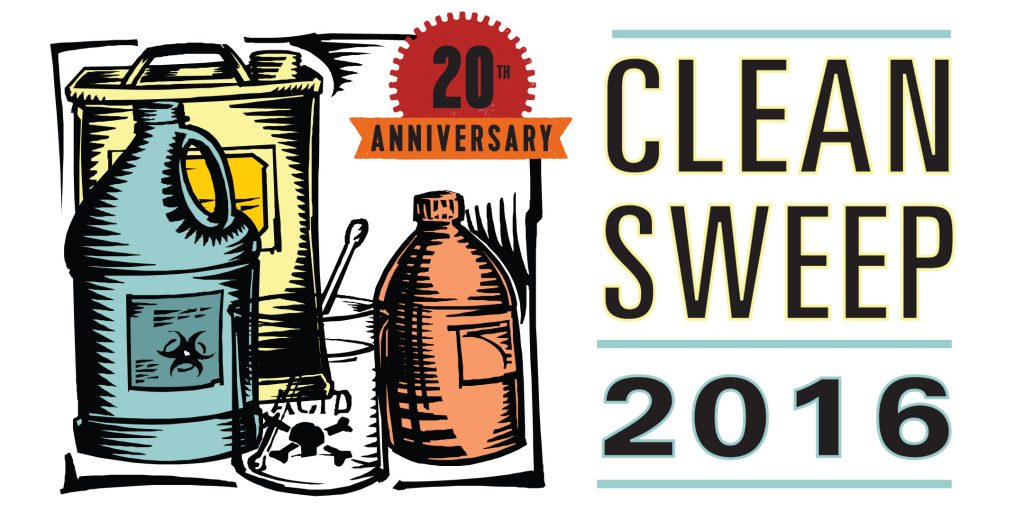
CLEAN SWEEP2016
CLEAN SWEEP 2016

Gather up those old paints, thinners and pesticides. Clean Sweep 2016 is the place to turn in all those questionable items that might pollute our waterways, soils and homes.

Every year, regional partners for clean water and a healthy environment host a community hazardous waste collection day, known as Clean Sweep. Now in its 20th year, Clean Sweep provides a safe disposal venue by collecting chemicals and other materials which pose a threat to public health, water and environment.


Clean Sweep is free to farmers in the eight NYC Watershed counties on September 23rd and free to all Delaware County household residents on September 24th. Delaware County businesses, municipalities and county agencies are also invited to properly dispose of waste materials.  Disposal services for businesses and municipalities are provided “at cost” with a cost estimate based on your itemized disposal list.

Dr. Berne Sweeney of Stroud Institute Presents to Staff

DR. BERNE SWEENEY OF STROUD INSTITUTE PRESENTS TO STAFF

On July 12th the Watershed Agricultural Council (WAC) hosted a presentation with Dr. Berne Sweeney, Director of the Stroud Water Research Center. Approximately 80 people from the Department of Health, Environmental Protection Agency, Department of Environmental Protection (DEP), Department of Environmental Conservation, National Resource Conservation Service, U.S. Department of Agriculture, Farm Service Agency, Delaware County Soil & Water, DEP Stream Management, WAC Council members, Agriculture Committee members and Staff.

Showcasing the importance Riparian Buffers have on stream ecology, Dr. Sweeney discussed the vital role forests and trees play for stream bank stabilization, plant and animal life as well as water temperature. Basing his findings off of numerous scientific experiments and studies, Dr.Sweeney presented staff with his findings over the last few decades. The mission of the Stroud Center is to “advance knowledge and stewardship of freshwater systems through global research, education, and restoration.” For more information visit: www.stroudcenter.org

May 2016 E-News

The fields and forests of the NYC Watershed are finally getting green! We had our  annual Farm Tour this month, with 65 attendees! Down in the Croton Watershed the prestigious Old Salem Spring Horse show is wrapping up at East of Hudson participant farm Old Salem Farm. The 2016-2017 Guide to Pure Catskills Products is hitting stands this Memorial Day, and a new We Are Pure Catskills Video featuring Wayside Cider was released this month.
For these stories and more, Click Here!
MAY2016_header

2016 Farm Tour a Success!

Our 2016 Farm Tour, held on May 3rd was a great success! Check out the photos below for a behind the scenes look at our participant farms and the great work we are doing in the NYC Watershed! The farms on the tour this year were: 1.) Windswept Acres, an equine operation 2.) Mallaber Farm, a beef operation 3.) Wildflower Farm, a beef and fish operation and 4.) Byebrook Farm, a dairy and cheese operation. We want to thank everyone who made the 2016 Farm Tour a wonderful day! Read the Itinerary and farm information (with before photos) here.